Sexually Transmitted Infections
An Introduction to Sexually Transmitted Infections
Sexually transmitted infections (STIs) affect millions of people worldwide; approximately 1 in 5 adults in the US had an STI in 2018. More than 30 bacteria, viruses and bacteria can be transmitted through sexual contact. Many bacterial infections can be treated effectively using ceftriaxone, doxycycline, penicillin, moxifloxacin, and the nitroimidazoles for gonorrhoea, chlamydia, syphilis, Mycoplasma genitalium, and trichomoniasis, respectively, although antibiotic resistance has reduced treatment options for gonorrhoea. Viral STIs are currently incurable: hepatitis B, herpes simplex virus, HIV and human papillomavirus, though effective vaccines are available for hepatitis B and HPV, there are several vaccine candidates for HIV and herpes are in clinical development.
Expert video highlights and insights from the conference hub and comprehensive peer-reviewed articles from our journal, touchREVIEWS in Infectious Diseases, provide updates on the changing treatment landscape. To learn more about how the latest developments impact on patient outcomes view our expert-led learning activities.
Our supporting partners do not constitute an endorsement of the content on this page.


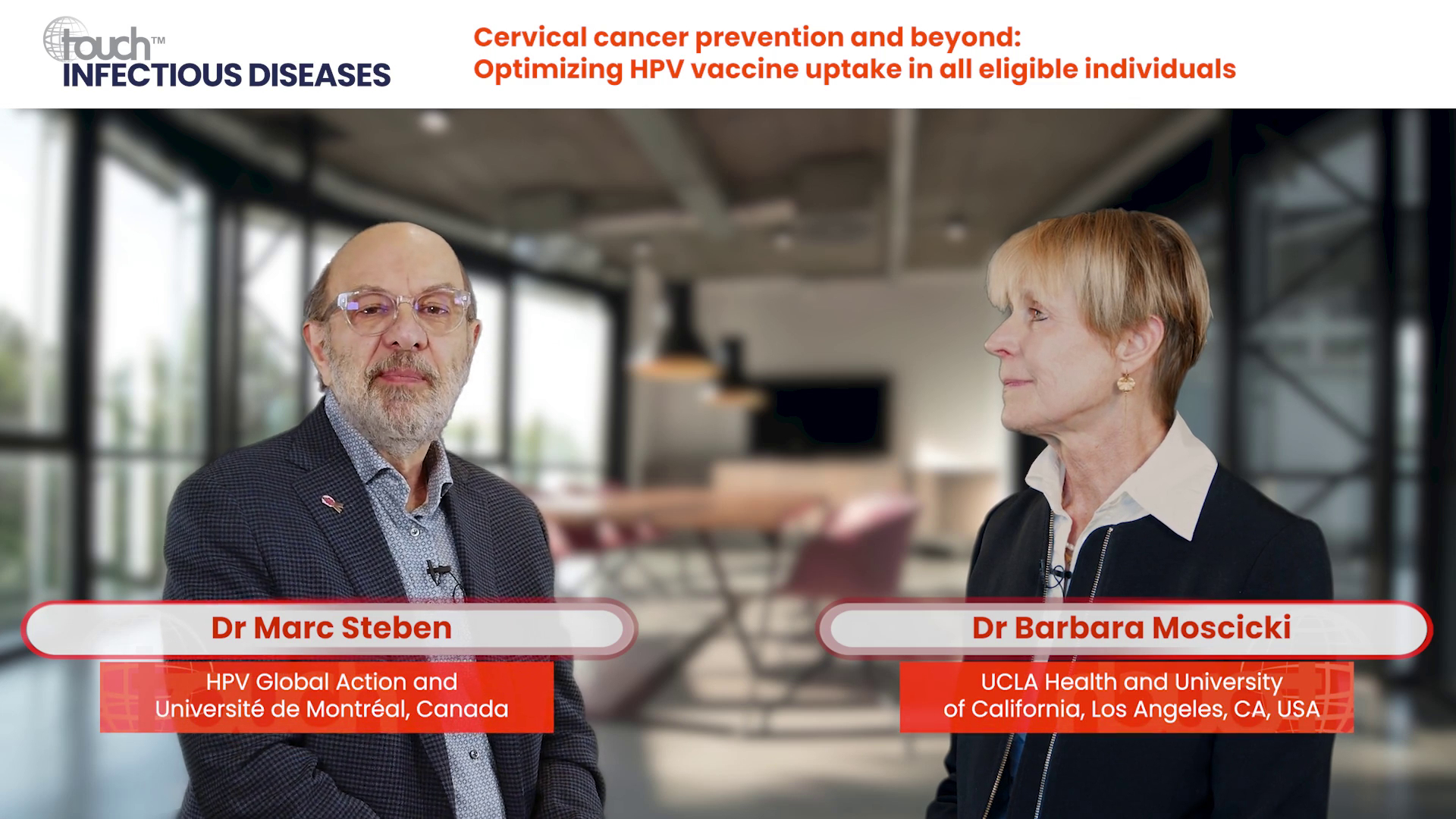
Complex screening pathways can result in women being lost at multiple stages of care. How can single-visit models help to improve screening, diagnosis and treatment? We spoke with Dr Marc Steben, about the evolution of single-visit cervical cancer screening and ...

Celebrating the next generation of innovators in infectious diseases Following the success of the 2025 Future Leaders, touchINFECTIOUS DISEASES is delighted to launch nominations for the Future Leaders 2026 initiative. The infectious diseases landscape continues to evolve rapidly, driven by emerging pathogens, ...

Presented at CROI 2026, Prof. Kate Seib discusses we the biological rationale for cross-protection, interpretation of the GoGoVax trial findings, and what these results mean for future vaccine development and prevention counselling.

The STI & HIV World Congress is the leading global forum on sexually transmitted infections (STIs), HIV, and sexual health. Jointly organized by the International Society for Sexually Transmitted Diseases Research (ISSTDR) and the International Union Against Sexually Transmitted Infections (...

In this Q&A, Jarod Hanson, Chief Content Office of ProMED, in affiliation with ISID, discuss how the ProMED platform continues to empower clinicians and epidemiologists worldwide, its evolving integration of AI, and how new partnerships aim to extend its reach into low-resource settings to strengthen the global early warning system.

Dr Christoph Boesecke presented a study using the Mpox Severity Score system, at the 19th European AIDS Conference (EACS 2025). The Mpox Severity Score system is a tool designed to standardize clinical assessment and improve understanding of disease progression. In this interview, he discusses the system’s clinical relevance, evolving mpox trends since the 2022-2023 outbreaks, and key updates from EACS 2025.

The “PS15 – Co-Chairs’ Choice” session at EACS 2025 gathered a diverse set of late-breaking studies showcasing the most significant and interesting advances in HIV treatment and prevention research presented this year. Curated by session chairs Bruno Spire, Jean-Michel Molina, Karine Lacombe ...
Bacterial vaginosis (BV) remains one of the most common vaginal infections worldwide, yet accurate diagnosis continues to challenge clinicians. In this expert interview, Dr Olivia Van Gerwen (University of Alabama at Birmingham) explores the limitations of current diagnostic tools, the impact of misdiagnosis and how advances in molecular and point-of-care testing could transform women’s sexual health practice.
In our inaugural touchINFECTIOUS DISEASES Future Leaders 2025 campaign, we celebrate early-career clinicians and researchers whose innovation, leadership, and curiosity are already shaping better outcomes in patient care, antimicrobial stewardship, and global health.

The International AIDS Society Conference 2025 (IAS 2025) brought together global leaders in HIV science, policy, and community advocacy against a backdrop of funding crises and scientific breakthroughs. One theme rang clear: innovation alone isn’t enough. Delivery, access, and equity must catch up with the science. We spoke with leading experts and advocates to ask: What single development at IAS 2025 will have the greatest impact on HIV prevention or care going forward? Their answers capture the momentum, and the challenges, that will shape the next era of the global HIV response.

Short-cycle therapy (SCT) has previously shown promise in maintaining viral suppression among young people living with HIV. In this Q&A, conducted at the IAS Conference on HIV Science 2025, Dr Adeodata R. Kekitiinwa, Chief Investigator of the BREATHER Plus trial, highlights the rationale for evaluating SCT using dolutegravir-based regimens, key findings from the 96-week data, and the implications for adolescent HIV care in resource-limited settings.1 Dr Kekitiinwa also shares insights into adherence patterns and emerging alternatives such as long-acting injectables.






Physician burnout is at a critical point. In this episode, Nicky speaks with Dr Alfred Atanda about why so many physicians are burning out and what can be done to change the trend. From personal experience to system-wide solutions, Dr Atanda shares valuable insights on improving physician well-being and building a more effective healthcare culture.

In this episode, we explore the future of continuing medical education (CME) with the team behind touchIME. Hannah Fisher and Matthew Goodwin share insights into global and US trends, the importance of patient inclusivity and how educational outcomes are evolving to better measure the direct impact of learning on clinical practice and patient care.


touchINFECTIOUS DISEASES were thrilled to speak with Professor Barbara Van Der Pol (Professor of Medicine and Public Health, University of Alabama at Birmingham, AL) about her perspectives on recent advances in sexually transmitted infection (STI) diagnostic tools, management and breaking ...

As 2024 draws to a close, we’re celebrating a wonderful year of content. From insightful expert Q&As and peer-reviewed articles to conference highlights and a wealth of medical education, it’s been a year filled with content that we hope has been useful to our audience. We’ve had the privilege of connecting with leading experts and working alongside medical societies to support the infectious diseases community with high-quality, easily accessible content.

In this episode, we explore how point-of-care testing is transforming the management of sexually transmitted infections (STIs). Joined by Dr Libby van Gerwen, we discuss the rising global STI rates and the role these innovative tests play in addressing the issue. We also explore the challenges current point-of-care tests face and how next-generation advancements could further transform the future of STI diagnosis and treatment.
Log into your Touch Account
Keep track of your clinical interests and newsletter subscriptions.
Sign up with an Email
Or use a .
Register now for FREE access
Already registered? Login below.