

– Dr Olivia Van Gerwen
Bacterial vaginosis (BV) remains one of the most common vaginal infections worldwide, yet its diagnosis continues to challenge clinicians. Conventional methods such as Amsel’s criteria and Nugent scoring, while widely used, are often limited by subjectivity, cost and accessibility. Recent advances in nucleic acid amplification tests (NAATs) and point-of-care diagnostics are offering new opportunities to improve accuracy and patient outcomes.
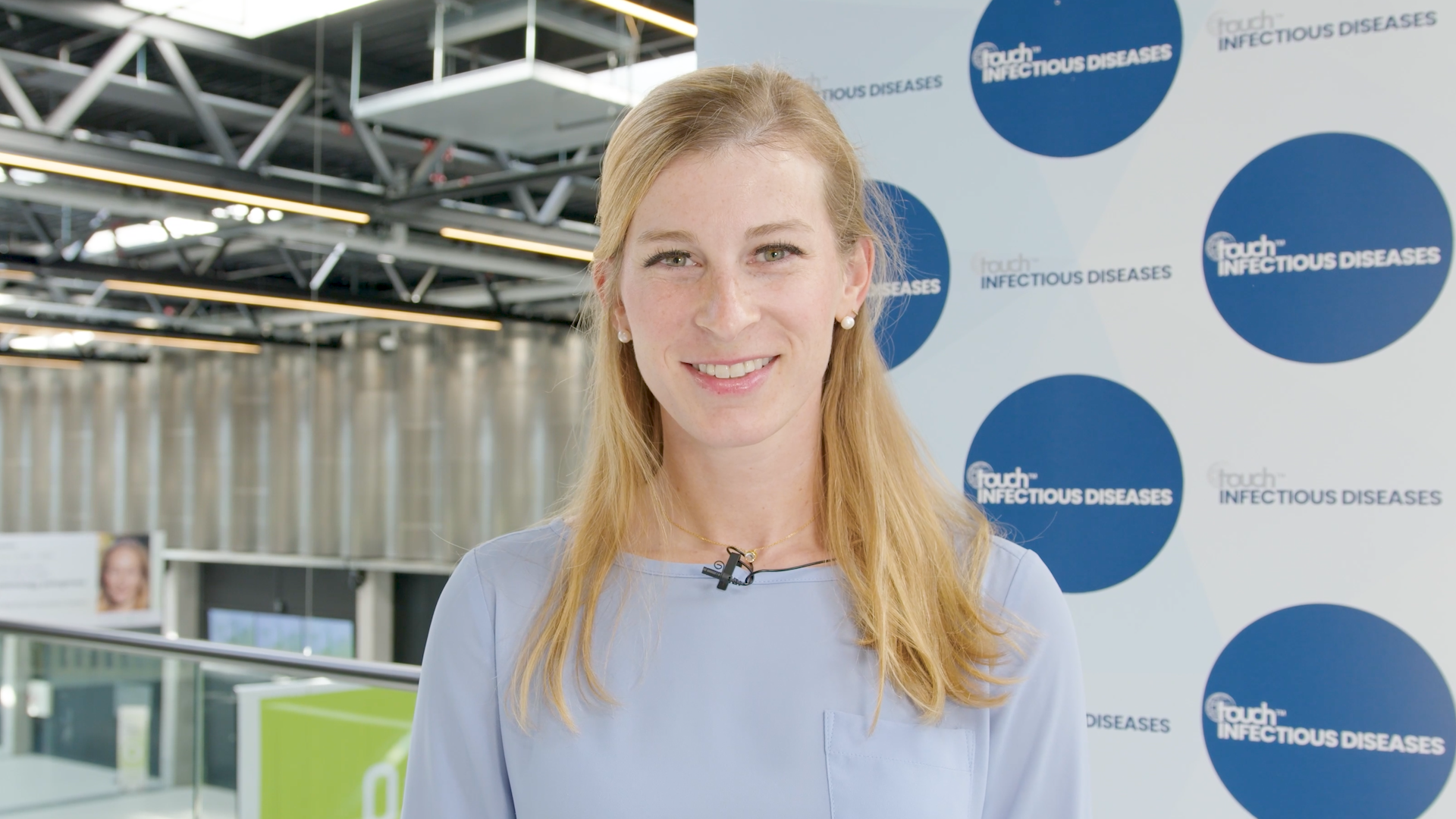
In this expert interview, Dr Olivia (Libby) Van Gerwen (University of Alabama at Birmingham) discusses the strengths and weaknesses of current BV diagnostic tools, the consequences of misdiagnosis in high-risk groups and how emerging technologies could redefine best practice in women’s sexual health.
In the US, the 2021 Sexually Transmitted Infections (STI) Treatment Guidelines from the Centers for Disease Control and Prevention (CDC) largely drive the way clinicians diagnose bacterial vaginosis. Per this guidance, there are multiple options, but each has its limitations. Amsel criteria2 and Nugent scoring3 are two methods of clinical diagnosis which are frequently used, especially in resource limited settings where molecular diagnostic platforms are not available.
Amsel’s criteria
A BV diagnosis made using Amsel’s criteria requires at least three of the following four items:
- the presence of a homogenous, thin discharge that coats the vaginal walls
- the presence of clue cells
- pH of vaginal fluid >4.5
- a positive Whiff test
The primary limitations of this test include the requirement for a light microscope in the clinical space, the need for reader expertise, and limited sensitivity (~37%-70%).4
Nugent scoring
Nugent scoring can be used but is largely reserved for use in research settings as performing Gram staining at the point of care is not possible in most clinics. The CDC STI treatment guidelines also mention the use of BV nucleic acid amplification tests (NAATs)for diagnosis.5 Since 2021, more of these tests have become available, but in general, they detect BV associated bacteria with high sensitivity and specificity.
FDA-approved assays include the BD Max Vaginal Panel6, Aptima BV7, and the Xpert Xpress MVP.8 These are only recommended for use in symptomatic women and can be collected either by patients or providers. They have varied turnaround times, with some yielding results as quickly as 90 minutes after collection and some requiring several days. These have excellent sensitivity and specificity.
Limitations for these tests include:
- Varying detection targets across assays
- High cost in some cases
- Requirement for a testing platform that often requires a large capital investment
Another challenge is that while several assays are FDA-cleared for diagnosing BV in symptomatic women, there are also many laboratory-developed tests on the market that must be internally validated before they can be used reliably.
Several point-of-care BV tests that are recommended in the 2021 CDC STI Treatment Guidelines, including the Osom BV Blue test (which detects sialidase activity), the Affirm VP III (which detects high concentrations of Gardnerella vaginalis), and the FemExam Test Card (which measures pH and detects a by product of Gardnerella vaginalis).1
These tests can be useful in some settings, including resource limited settings where microscopy and/or Nugent scoring may not be feasible. As far as sensitivity goes, the Osom BV Blue test ranges from 79%-92% compared to Nugent score, making it a decent alternative in some settings.9 The BV Affirm VP III is most sensitive with used in conjunction with pH measurement and Whiff test, with sensitivity of 98%, but lower specificity at 81%.10 The FemExam Test card demonstrates 91% sensitivity and specificity of 61% among symptomatic women.11
Despite these suboptimal performance characteristics, these tools can be potentially beneficial in resource limited settings where the alternative is syndromic management. Overall, these point of care diagnostics are diverse and their utility depends on which clinical setting is intending to use them.
Despite the wide variety of BV diagnostics available in the US, the reality is that many clinicians use either syndromic management, clinical tools such as Amsel’s criteria, or non-validated molecular tests to diagnose BV. Consequently, it is estimated that approximately 50% of BV cases are misdiagnosed in routine clinical practice, including both over diagnosis and missed diagnosis.12
Discharge or odour is often presumed to be caused by BV when another aetiology may explain the symptoms. For example, vulvovaginal candidiasis, irritant dermatitis, and desquamative inflammatory vaginitis can all present similarly and may be misdiagnosed as BV. Additionally, certain populations may be misdiagnosed with BV when they have another condition that leads to elevated pH or depleted lactobacilli, such as vaginal atrophy in the setting of menopause.
An increasing number of companies are working to develop more comprehensive NAATs to detect BV. As the pathogenesis and causative organisms associated with BV become better characterized, these tests are becoming more sensitive and specific and will lead to more accurate diagnoses of BV.
Many are now multiplexed with other common vaginal infections, such as vulvovaginal candidiasis and trichomoniasis, which should further reduce rates of misdiagnosis.
This is a significant issue and it all comes back to access to care. Currently, diagnosing BV requires a physical exam and clinical assessment such as microscopy. For women with limited financial means or demanding work schedules, attending a clinic for this assessment is often an undue burden. As a result, they are the ones who typically rely on syndromic management and unfortunately, are either over treated or treated incorrectly.
My hope for the future is that diagnostics can bridge this gap by allowing women to get care in a way that better fits their lives. Advances in point-of-care diagnostics and patient-centred solutions are key in clinical practice to improve outcomes for these patients.
Related content
- On the spot: How point-of-care testing is tackling rising STI rates
- An overview of the BD MAXTM vaginal panel assay on the BD CORTM system for molecular detection of causes of vaginitis
- Novel Antifungals for the Treatment of Vulvovaginal Candidiasis: Where Are We?
- Further content in sexual health and STIs
About Olivia Van Gerwen
Dr Olivia Van Gerwen completed her internal medicine residency and chief residency at Tulane University in New Orleans, LA. She returned to her hometown of Birmingham, AL to pursue a fellowship in Infectious Diseases at the University of Alabama at Birminhgam (UAB), which she completed in 2020 in addition to a post-doctoral fellowship in health services, outcomes, and effectiveness research.
She is now an Assistant Professor in the UAB Division of Infectious Diseases. Olivia’s research focuses on HIV and STI prevention as well as comprehensive sexual health promotion among LGBTQ+ populations. Clinically, she enjoys providing sexual healthcare services to patients at the UAB Gender Health clinic, patients living with HIV at the UAB 1917 Clinic and is the Assistant Medical Director at the UAB Vaginitis Clinic.
Editor: Katey Gabrysch, Editorial Director.
Disclosures: This short article was prepared by touchINFECTIOUS DISEASES in collaboration with Olivia Van Gerwen. The content was developed and edited by human editors. No fees or funding were associated with its publication. touchINFECTIOUS DISEASES utilize AI as an editorial tool (ChatGPT (GPT-4o) [Large language model]. https://chat.openai.com/chat).
Olivia Van Gerwen is a consultant for GSK, and Abbott; has received grant/research support from NIH/NIAID, Gilead Sciences, BioNTech; is on the advisory board for Biomerieux.
Cite: Olivia Van Gerwen. Bridging the diagnostic gap in bacterial vaginosis: Towards faster, smarter testing.
touchINFECTIOUS DISEASES. 14 October 2025
References
- Centers for Disease Control and Prevention. Sexually transmitted infections treatment guidelines, 2021. Available at: www.cdc.gov/std/treatment-guidelines/default.htm (accessed 14 October 2025).
- Centers for Disease Control and Prevention. Bacterial vaginosis. Available at: www.cdc.gov/std/treatment-guidelines/bv.htm (accessed 14 October 2025).
- National Library of Medicine. Bacterial vaginosis. In: StatPearls. Available at: www.ncbi.nlm.nih.gov/books/NBK542319 (accessed 14 October 2025).
- Coleman JS, Gaydos CA. Molecular Diagnosis of Bacterial Vaginosis: an Update. J Clin Microbiol. 2018 Aug 27;56(9):e00342-18. doi: 10.1128/JCM.00342-18.
- Fredricks DN, Fiedler TL, Marrazzo JM. Molecular identification of bacteria associated with bacterial vaginosis. N Engl J Med. 2005;353:1899–911. doi:10.1056/NEJMoa043802.
- Hillier SL, Krohn MA, Klebanoff SJ, Eschenbach DA. The relationship of hydrogen peroxide-producing Lactobacillus species to bacterial vaginosis and genital microflora in pregnant women. J Infect Dis. 1992;165:1165–70. doi:10.1093/infdis/165.6.1165.
- Menard JP, et al. Molecular quantification of Gardnerella vaginalis and Atopobium vaginae loads to predict bacterial vaginosis. Clin Infect Dis. 2008;47:33–43. doi:10.1086/588661.
- BD. BD MAX™ Vaginal Panel. Available at: emea.bd.com/advancing-diagnostics/assays/women-health-and-stis/vaginal-panel (accessed 14 October 2025).
- Hologic Women’s Health. Vaginitis solutions. Available at: hologicwomenshealth.com/vaginitis (accessed 14 October 2025).
- Cepheid. Xpert® Xpress MVP. Available at: www.cepheid.com/en-US/tests/blood-virology-womens-health-sexual-health/xpert-xpress-mvp.html (accessed 14 October 2025).
- Yudin MH, Money DM. Screening and management of bacterial vaginosis in pregnancy. Popul Health Manag. 2020;23:521–6. doi:10.1089/pop.2020.0265.
- Schwebke JR, et al. Diagnostic performance of a molecular test versus clinician assessment of vaginitis. J Clin Microbiol. 2005;43:1304–8. doi:10.1128/JCM.43.3.1304-1308.2005.
Register now to receive the touchINFECTIOUS DISEASES newsletter!
Don’t miss out on hearing about our latest peer reviewed articles, expert opinions, conference news, podcasts and more.