
can have a voice in outbreak detection.”
– Jarod Hanson
For more than 30 years, ProMED has been a trusted global source of outbreak intelligence, enabling early detection and response through human-curated reporting, operating under the umbrella of the International Society for Infectious Diseases (ISID).
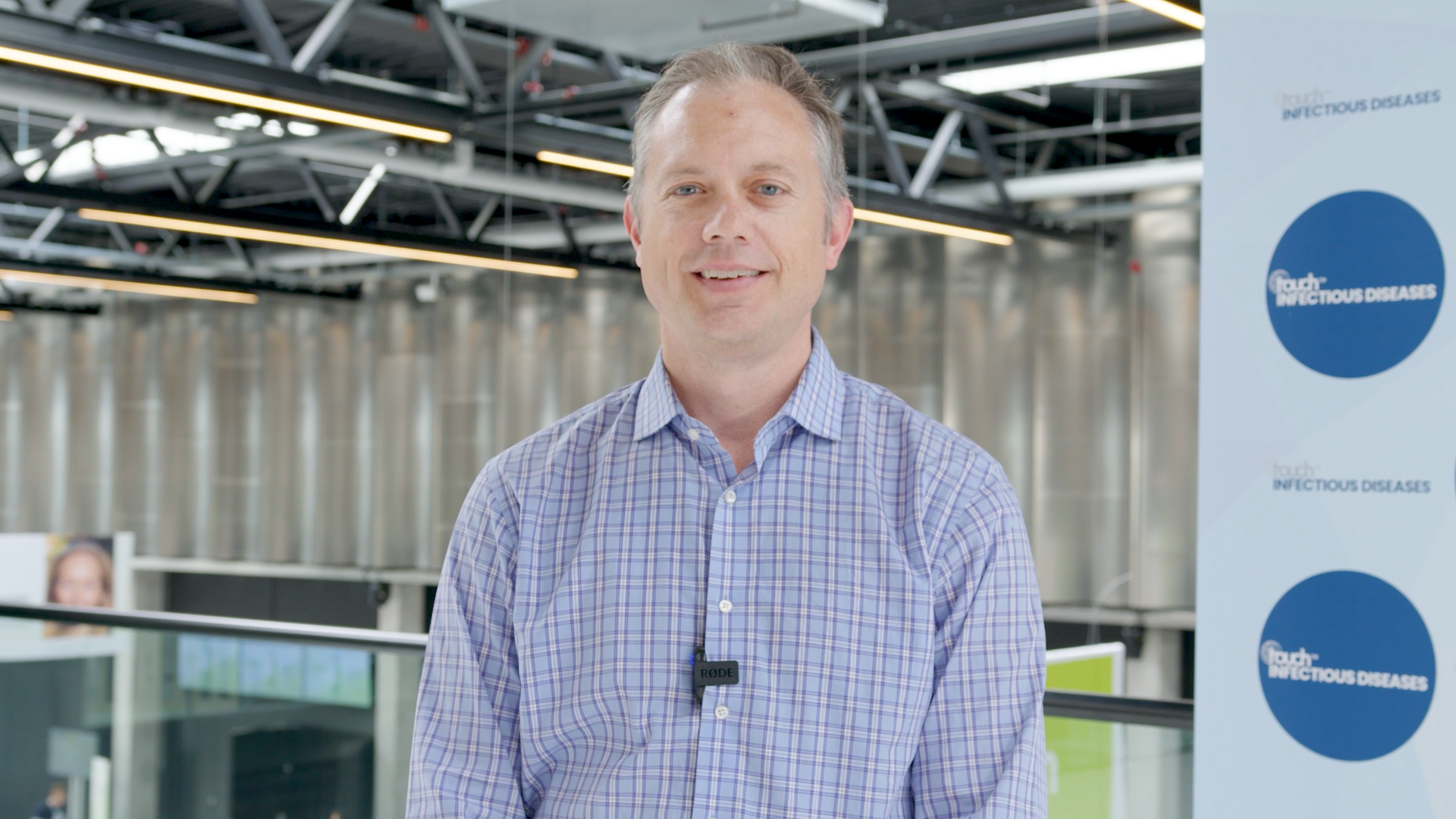
In this Q&A, Jarod Hanson, Chief Content Office of ProMED, in affiliation with ISID, discuss how the platform continues to empower clinicians and epidemiologists worldwide, its evolving integration of AI, and how new partnerships aim to extend its reach into low-resource settings to strengthen the global early warning system.
ProMED continues to support frontline healthcare providers in low-resource settings by serving as a free, trusted source of outbreak information, but also as a mechanism by which they can report firsthand observations of unusual cases or case clusters into global alerts that can help bring attention and resources to bear, limiting an outbreak before significant spread occurs.
We enable our users by providing access to critical, curated outbreak intelligence and essential epidemiological context that aids in diagnosis. By leveraging our on-the-ground reporting networks, utilising low-tech channels for data submission, and employing our human subject matter experts (SMEs) to cut through the ever-increasing digital noise, we ensure these frontline workers always have a voice in reporting an outbreak. This fosters a global community of shared vigilance that acts as a force multiplier at multiple points in the healthcare and disease reporting chains.
ProMED’s new website is a foundational enhancement designed to serve our frontline health professionals better and faster, while complying with a wide variety of national regulatory requirements and minimizing our costs, as “free” emails and maps are not actually free to us.
The new interface leverages a true global network of SMEs, taking advantage of geography to speed up reporting, versus the old, siloed model where much of the reporting on the global network originated from North America.
The new interface is far more intuitive, searchable, and mobile-friendly, allowing users to quickly find and track outbreaks by pathogen, species, location, or date. We’ve transitioned our mapping to provide clearer situational awareness at a glance of the actual location impacted, while we continue to look for a replacement for our global outbreak map, which was no longer being supported by its developer.
As we embark on the second phase of our planned upgrades, a new backend dashboard will allow our moderators to verify and publish reports even more efficiently, getting critical, vetted information to users in a timelier manner. Ultimately, these upgrades are about ensuring ProMED remains relevant in a world transitioning to AI, while simultaneously strengthening our disease detection and reporting processes.
ProMED uses AI to augment, not replace, our team’s decades of combined expertise. We see AI as a tool to help rapidly sift through vast global data streams and flag potential signals for our expert moderators. This allows our team to focus their efforts on the critical human tasks of contextualisation and analysis.
This ensures that the final alert delivered to frontline healthcare professionals is both timely and trustworthy, the latter being what ProMED is most often cited for by our users, having been a trusted source of apolitical outbreak information for over 30 years.
ProMED’s human-curated model is uniquely effective because it transforms event-based reports into trusted, contextualised intelligence by having expert moderators vet and interpret every signal, filter out noise (a much more daunting problem than it was even five years ago!), and provide the crucial clinical and epidemiological context that algorithms miss or misinterpret.
ProMED’s model has evolved by leveraging a far wider variety of data sources, including AI and social media, than ever before. However, with all that data come challenges, particularly misinformation and disinformation.
Our 31 years of historical data, and SMEs with decades of experience, allow us to quickly filter out repetitive stories and false information, while also enabling us to correct mistakes when they occur. AI tools alone often repeat stories, apply new dates to old news, or fail to provide key data points from the original source, whereas ProMED delivers them to our readers as part of every post.
We are incredibly excited about initiatives that deepen our connections at the local and regional levels. A key focus is on building formalised partnerships with in-country professional medical associations and field epidemiology training programmes. This allows us to embed ProMED as a tool for their members, creating a more robust and direct channel for frontline observations to reach a global audience. Furthermore, we are exploring strategic partnerships with organisations that have established, low-tech SMS-based reporting systems, which will help us bridge the digital divide and capture vital signals from the most remote and resource-limited settings.
Healthcare professionals are one of the key pillars of our reporting system. We encourage every clinician, veterinarian, nurse, public health officer, and member of the public to become a sentinel. You do not need to wait for a confirmed diagnosis, if you see or hear of a cluster of unusual or severe illness that concerns you, report it, especially if it isn’t being reported by local media.
You can submit a report directly through our website or connect with one of our in-country moderators or correspondents, who are often senior colleagues within your own professional networks. By sharing your first hand reports, you help ensure the entire global medical enterprise is aware of the problem and help ensure an appropriate and timely response, which protects all of us.
To help further the reach of ProMED, consider donating: https://donorbox.org/promedsupport

About ProMED
ProMED (the Program for Monitoring Emerging Diseases) is one of the world’s longest-running digital platforms for infectious disease surveillance, providing early warnings on outbreaks through human-curated reports, operated under the umbrella of the International Society for Infectious Diseases (ISID). For more than 30 years, it has served as a trusted, open-access source of outbreak intelligence, connecting clinicians, veterinarians, and public health professionals across the globe.
About Jarod Hanson
Jarod Hanson, DVM, PhD, DACVPM, DABT is a veterinary virologist, toxicologist, public health consultant, adjunct faculty member at University of Maryland, and the Chief Content Officer for ProMED. Dr. Hanson earned his DVM from the University of Minnesota and his PhD in infectious diseases from the University of Georgia.
Related content
- International Society for Infectious Diseases (ISID) – Society partner homepage
- Mpox: Current clinical considerations on antiviral treatment
- Rare pneumonic plague-related death sparks health advisory
- Optimizing hepatitis C treatment and management: Best practice, barriers and clinical strategies
This content has been developed independently by Touch Medical Media for touchINFECTIOUS DISEASES. Views expressed are the speaker’s own and do not necessarily reflect the views of Touch Medical Media.
Editor: Katey Gabrysch, Editorial Director.
Disclosures: This short article was prepared by touchINFECTIOUS DISEASES in collaboration with Jarod Hanson, and International Society for Infectious Diseases (ISID). The content was developed and edited by human editors. No fees or funding were associated with its publication. touchINFECTIOUS DISEASES utilize AI as an editorial tool (ChatGPT (GPT-4o) [Large language model]. https://chat.openai.com/chat). Jarod Hanson discloses he is a consultant for Monumedical LLC.
Cite: Jarod Hanson. ProMED: Strengthening frontline outbreak detection through human-curated intelligence. touchINFECTIOUS DISEASES. 16 October 2025
Register now to receive the touchINFECTIOUS DISEASES newsletter!
Don’t miss out on hearing about our latest peer reviewed articles, expert opinions, conference news, podcasts and more.