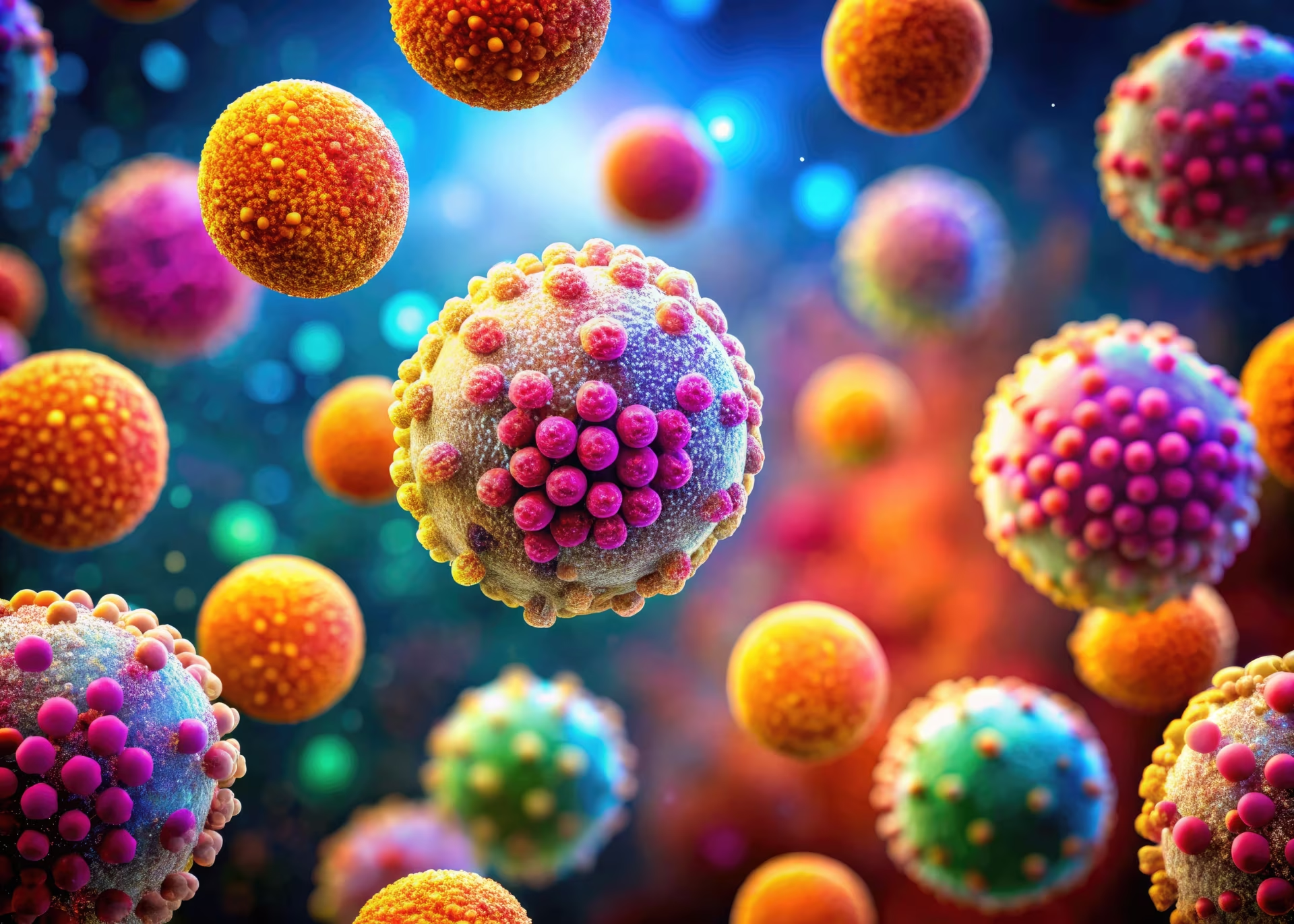
Antimicrobial Resistance
An Introduction to Antimicrobial Resistance
Antimicrobial resistance is one of the biggest public health crises worldwide. Many bacteria, parasites, viruses and fungi can no longer be eradicated by existing antimicrobial agents. Antibiotic resistance in bacteria is particularly concerning, and has been largely attributed to the overuse and inappropriate use of antibiotics. There is an urgent need for enhanced understanding of drug resistance mechanisms and the development of novel strategies to control multidrug-resistant bacterial infections. New approaches being explored include immunotherapy, drug combination therapy, bacteriophage therapy and CRISPR, a genome editing technology. Nanotechnology is also emerging as a valuable therapeutic tool to combat antimicrobial resistance.
Our supporting partners do not constitute an endorsement of the content on this page.

Celebrating the next generation of innovators in infectious diseases Following the success of the 2025 Future Leaders, touchINFECTIOUS DISEASES is delighted to launch nominations for the Future Leaders 2026 initiative. The infectious diseases landscape continues to evolve rapidly, driven by emerging pathogens, ...

As antimicrobial resistance continues to threaten global health, interest is growing in alternative approaches to treating bacterial infections. At ESCMID 2026, Dr Ikechukwu Moses presented early research exploring bacteriophages against methicillin-resistant Staphylococcus pseudintermedius, an emerging zoonotic pathogen associated with companion animals. ...

Conflict, war and displacement are increasingly recognised as major drivers of antimicrobial resistance (AMR), creating conditions where infections spread rapidly and access to healthcare, diagnostics and effective treatment is severely disrupted. At ESCMID 2026, Prof. Souha Kanj (American University of Beirut ...

The inaugural Interdisciplinary Meeting on Antimicrobial Resistance and Innovation (IMARI 2026), convened by the American Society for Microbiology (ASM) and the Infectious Diseases Society of America (IDSA) from 28–30 January 2026, in Las Vegas, USA, brought together researchers, clinicians, industry experts and policymakers ...
Dr Darius Hareza (Northwestern University, Chicago, USA) discusses major developments from IDWeek 2025, including the alarming rise in NDM-producing Enterobacterales, the approval of gepotidacin for gonorrhoea, and spirited debates around daptomycin versus vancomycin and new UTI treatment durations.

In this Q&A, Jarod Hanson, Chief Content Office of ProMED, in affiliation with ISID, discuss how the ProMED platform continues to empower clinicians and epidemiologists worldwide, its evolving integration of AI, and how new partnerships aim to extend its reach into low-resource settings to strengthen the global early warning system.
In our inaugural touchINFECTIOUS DISEASES Future Leaders 2025 campaign, we celebrate early-career clinicians and researchers whose innovation, leadership, and curiosity are already shaping better outcomes in patient care, antimicrobial stewardship, and global health.

Bacteriophage therapy uses viruses to infect and kill harmful bacteria, and is re-emerging as a powerful tool in the fight against multidrug-resistant infections. Once overshadowed by the discovery of antibiotics, this highly targeted treatment is now gaining global attention as antibiotic resistance continues to rise. In this Q&A, Ikechukwu Moses (Division of Infectious Diseases, EPM-UNIFESP, São Paulo, Brazil, explores how phage therapy works, its clinical applications, and what’s needed to bring it into mainstream infectious disease care.

Infectious disease diagnostics are at the forefront of tackling global health challenges. Research Fellow and PhD candidate Prerna S. Salian shares her journey from microbiology to pioneering faster sepsis detection, and her vision for integrating next-generation sequencing with AI to transform patient care.

Dr Clarissa Melo Czekster is a rising star in the field of enzymology and bacterial pathogenesis. In this Q&A, she reflects on her early inspirations, key mentors, and the molecular curiosity that drives her work in infectious diseases. From childhood experiments to developing novel antibiofilm tools, her career blends biochemical precision with a passion for collaborative science.

Physician burnout is at a critical point. In this episode, Nicky speaks with Dr Alfred Atanda about why so many physicians are burning out and what can be done to change the trend. From personal experience to system-wide solutions, Dr Atanda shares valuable insights on improving physician well-being and building a more effective healthcare culture.

We are delighted to welcome Dr Dariusz Hareza to the touchINFECTIOUS DISEASES Editorial Board. Dr Hareza is an Assistant Professor of Medicine (Infectious Diseases) at Northwestern University Feinberg School of Medicine, Chicago, IL, USA. He brings to the board a ...

The ESCMID Global Congress 2025 brought together world-leading researchers and clinicians to present practice-changing updates in infectious disease management. This article distils five critical insights from interviews and landmark trial results, covering innovations in antimicrobial therapy, fungal infections, resistance surveillance and ...

In this episode, we explore the future of continuing medical education (CME) with the team behind touchIME. Hannah Fisher and Matthew Goodwin share insights into global and US trends, the importance of patient inclusivity and how educational outcomes are evolving to better measure the direct impact of learning on clinical practice and patient care.
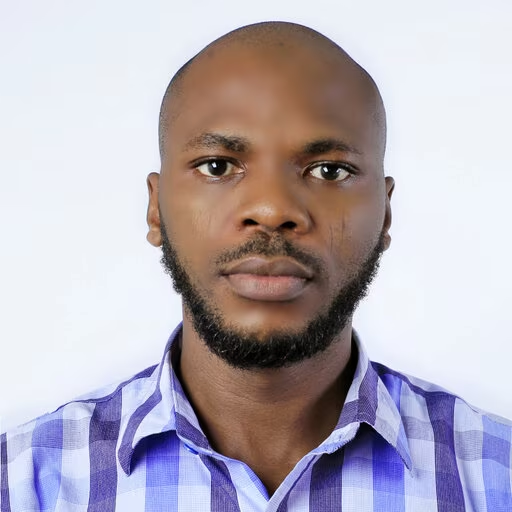
Dr. Ikechukwu B. Moses, winner of the ESCMID Global 2025 Emerging Young Investigator Award, explores antimicrobial resistance through a One Health lens. His work spans zoonotic pathogen transmission, bacteriophage therapy, and AI-driven genomic research, aiming to reduce antibiotic reliance and translate lab-based innovations into scalable, real-world clinical and veterinary solutions.
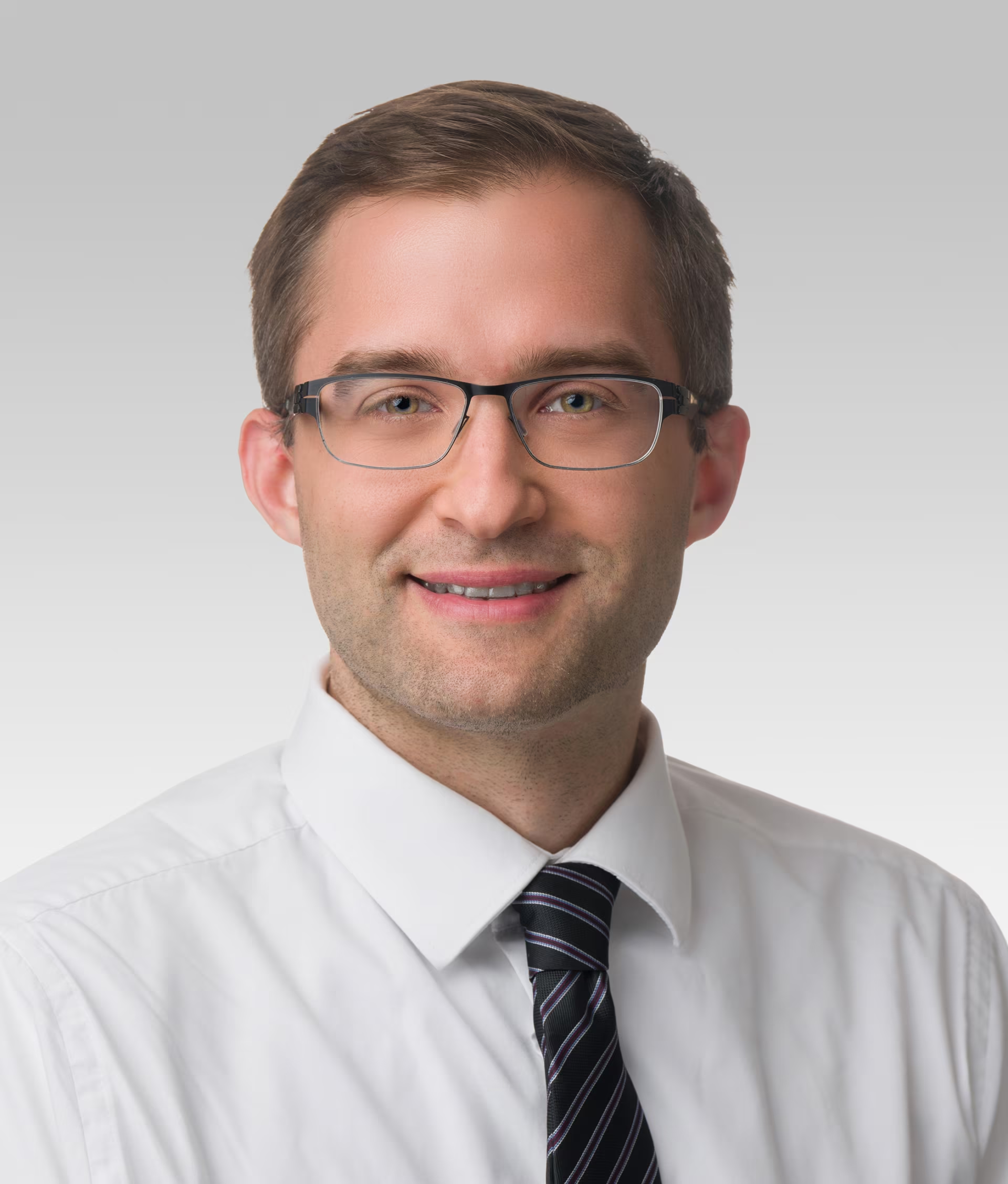
Dr Dariusz Hareza reflects on ESCMID Global 2025, highlighting its international scope, informal collaboration, and key themes in antimicrobial resistance. He discusses impactful sessions on global surveillance, Kazakhstan’s primary care initiatives, and novel approaches like CRISPR and AI, all pointing toward an innovative and integrated future in infectious diseases.
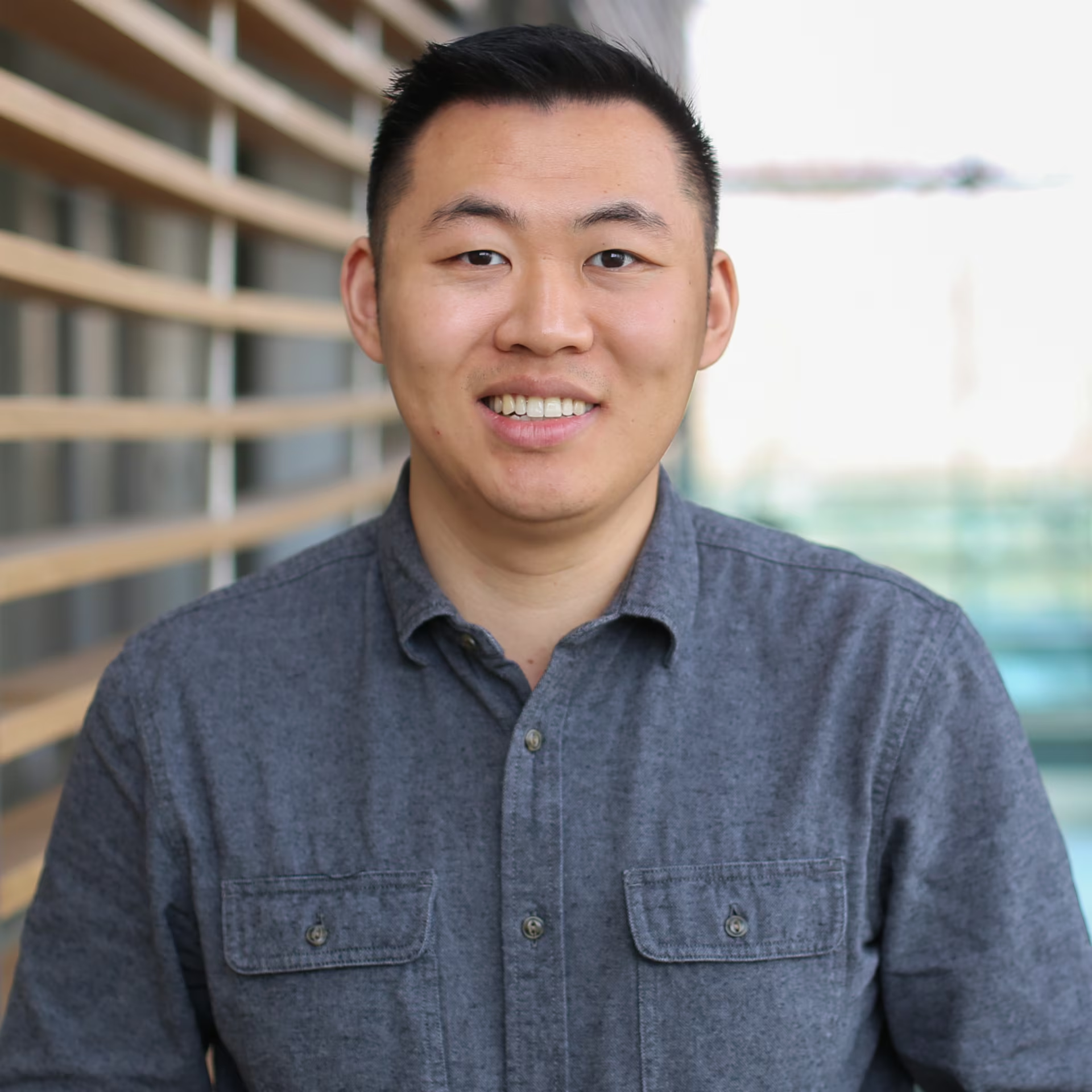
Dr Tony Bai, ESCMID Global 2025 Young Investigator Award winner, discusses his research on bacterial infections, antibiotic regimens, and his journey balancing clinical work, research, and family life.
Log into your Touch Account
Keep track of your clinical interests and newsletter subscriptions.
Sign up with an Email
Or use a .
Register now for FREE access
Already registered? Login below.