Emerging Infections
An Introduction to Emerging Infections
Emerging infections, driven by factors like climate change, global travel, and zoonotic spillover, continue to test global health systems. New and re-emerging pathogens such as SARS-CoV-2, mpox, and novel influenza strains highlight the need for constant vigilance.
This resource offers expert insights into the detection, management, and prevention of emerging diseases, covering diagnostic advances, surveillance, vaccine development, and public health preparedness. Our aim is to support clinicians with timely, evidence-based guidance in a rapidly evolving landscape.
Our supporting partners do not constitute an endorsement of the content on this page.


Prof. David Hayman discusses the pathogens currently on the global risk radar, the drivers of zoonotic spillover and the preparedness gaps that could shape the next pandemic. As concerns around emerging infectious diseases continue to grow, understanding the drivers of ...

Celebrating the next generation of innovators in infectious diseases Following the success of the 2025 Future Leaders, touchINFECTIOUS DISEASES is delighted to launch nominations for the Future Leaders 2026 initiative. The infectious diseases landscape continues to evolve rapidly, driven by emerging pathogens, ...

Recent public health updates have renewed attention on hantavirus infections worldwide. Here, we examine what hantavirus is, where cases are being reported, the current evidence around transmission and risk, and the key considerations for clinicians based on guidance from international ...

International Society for Infectious Diseases provides a global perspective on surveillance, innovation and equity in infectious disease control Infectious diseases remain a defining global health challenge, shaped by rapid scientific advancement and persistent inequities in access to care, knowledge and ...

At ESCMID 2026, Dr Jon Salmanton-Garcia (University of Cologne, Germany) discussed the growing challenge of viral infections in immunocompromised patients. He explores how transplantation, CAR-T therapy and newer immunosuppressive treatments are changing infectious risk profiles, and highlights important advances in diagnostics, ...

Discover how the latest data from CROI 2026 is shaping clinical practice and future directions in HIV care The 2026 Conference on Retroviruses and Opportunistic Infections (CROI) showcased a rapidly evolving HIV landscape, with a clear shift towards treatment simplification, long-acting innovation ...

We often focus on clinical excellence, but spend less time developing broader skills that could help us better lead with purpose and build more fulfilling, impactful careers. In this episode, part of a mini-series in partnership with LEADderm, Dr Jennifer Soung and Denise Mann explore how clinicians can engage with the media to educate, empower and extend their impact beyond the clinic.

Vaccine confidence has been significantly challenged in the wake of the COVID-19 pandemic, with implications for routine immunization, vaccine catch-up and equitable access to care. In this Q&A, Prof. Nada M. Melhem, Professor of Infectious Diseases and Microbiology, ...
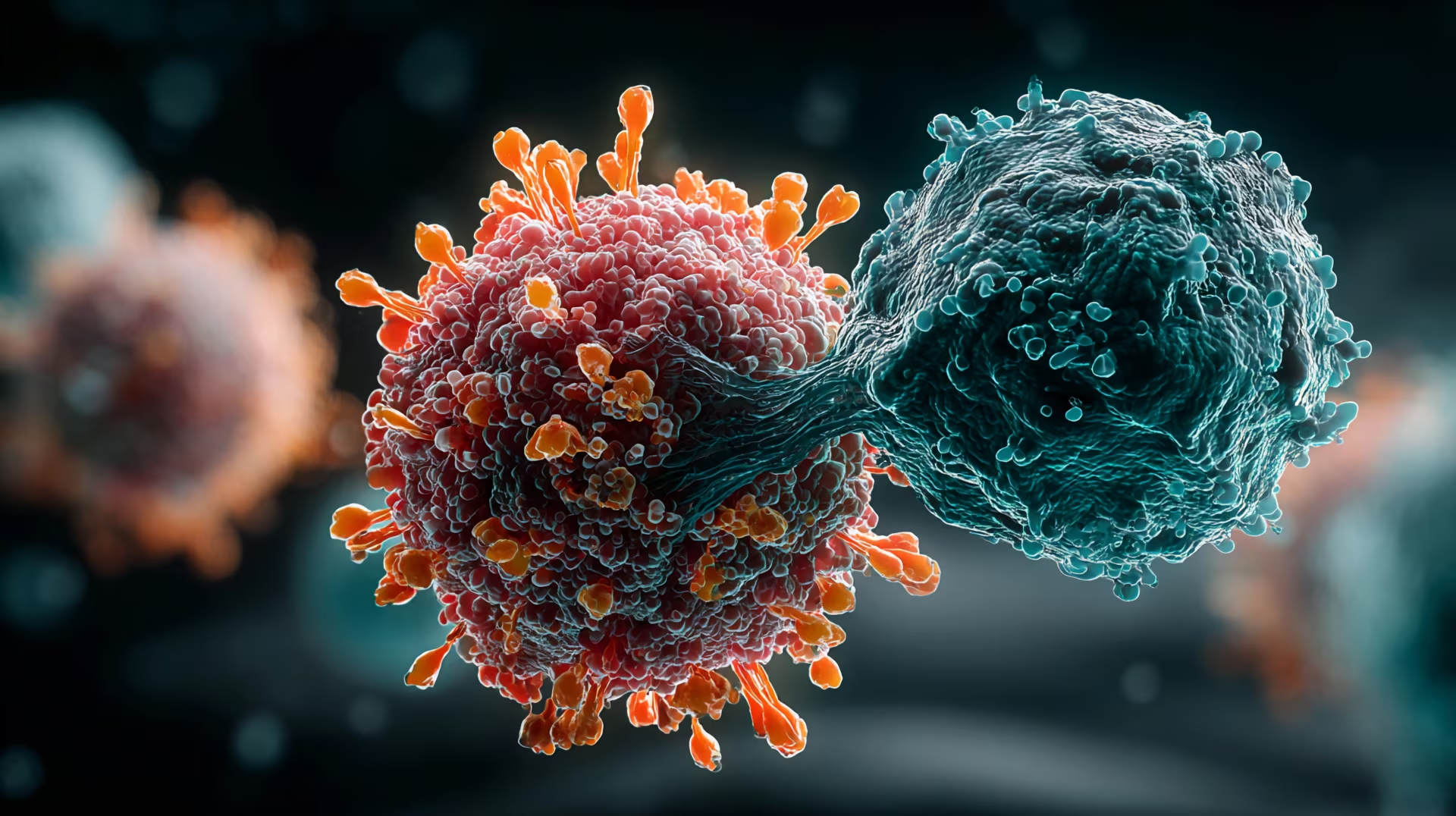
HIV persistence remains a central barrier to achieving durable viral remission, yet the immunological mechanisms that sustain infected cells within tissues continue to challenge the field. In this Q&A, Prof. Michael R Betts (Perelman School of Medicine, University of Pennsylvania, Philadelphia, PA, USA) discusses how decades of work in HIV immunology have shaped current understanding of CD8 T-cell function, tissue-based immunoregulation and the cellular features of the HIV reservoir, presented at the Centre of Excellence for Spatial Multi-Omics Research in Africa (CESORA) 2025 Symposium.

The STI & HIV World Congress is the leading global forum on sexually transmitted infections (STIs), HIV, and sexual health. Jointly organized by the International Society for Sexually Transmitted Diseases Research (ISSTDR) and the International Union Against Sexually Transmitted Infections (...

Dr Darius Hareza (Northwestern University, Chicago, USA) discusses major developments from IDWeek 2025, including the alarming rise in NDM-producing Enterobacterales, the approval of gepotidacin for gonorrhoea, and spirited debates around daptomycin versus vancomycin and new UTI treatment durations.

The European AIDS Clinical Society (EACS) 2025 surveyed a rapidly diversifying antiretroviral (ARV) treatment landscape in HIV. From first-in-class mechanisms to ultra–long-acting regimens and real-world outcomes in highly treatment-experienced populations. This article highlights the session PS09: “New Drugs in the ...

In this Q&A, Jarod Hanson, Chief Content Office of ProMED, in affiliation with ISID, discuss how the ProMED platform continues to empower clinicians and epidemiologists worldwide, its evolving integration of AI, and how new partnerships aim to extend its reach into low-resource settings to strengthen the global early warning system.
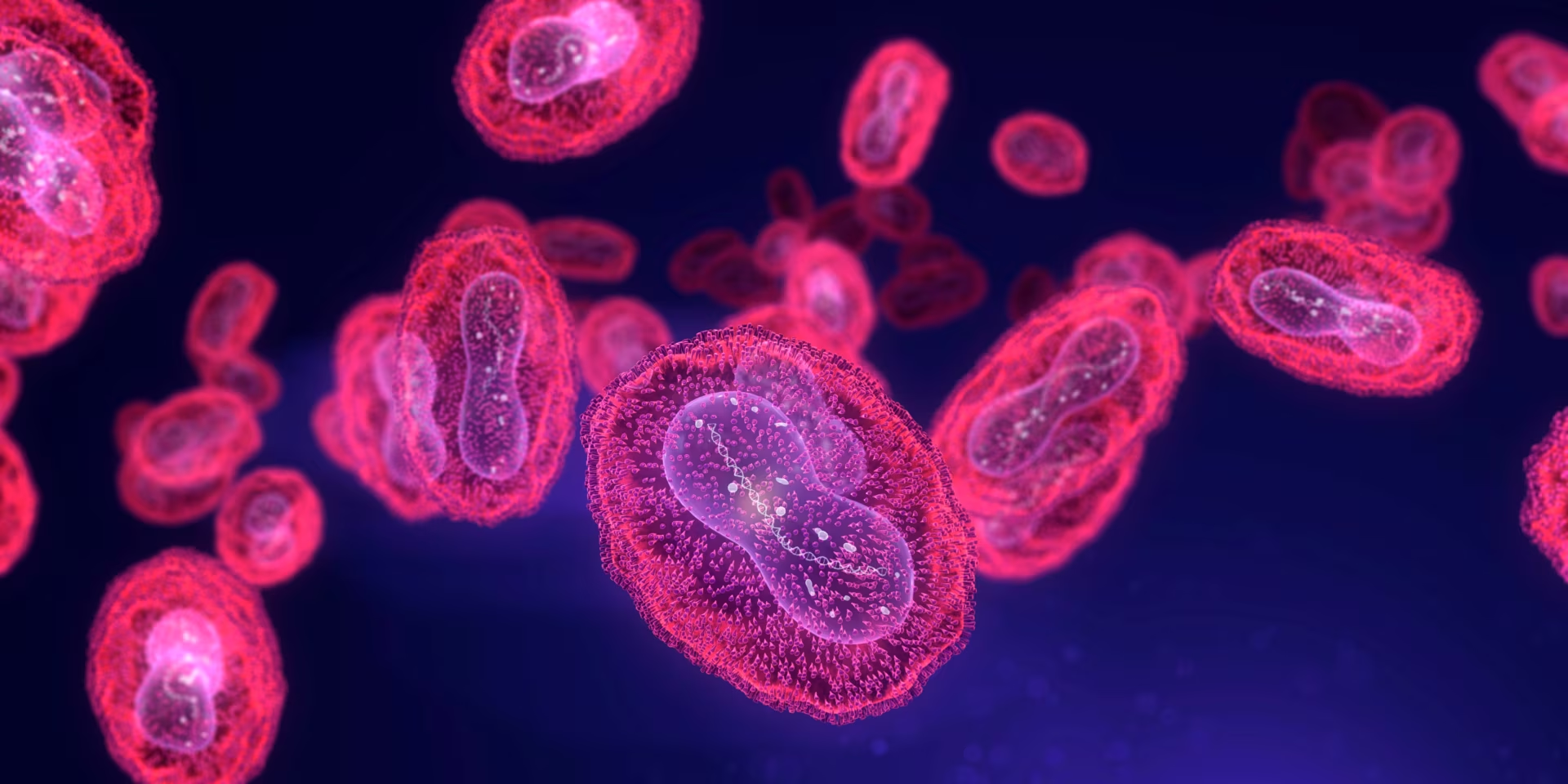
Dr Christoph Boesecke presented a study using the Mpox Severity Score system, at the 19th European AIDS Conference (EACS 2025). The Mpox Severity Score system is a tool designed to standardize clinical assessment and improve understanding of disease progression. In this interview, he discusses the system’s clinical relevance, evolving mpox trends since the 2022-2023 outbreaks, and key updates from EACS 2025.
In our inaugural touchINFECTIOUS DISEASES Future Leaders 2025 campaign, we celebrate early-career clinicians and researchers whose innovation, leadership, and curiosity are already shaping better outcomes in patient care, antimicrobial stewardship, and global health.

Bacteriophage therapy uses viruses to infect and kill harmful bacteria, and is re-emerging as a powerful tool in the fight against multidrug-resistant infections. Once overshadowed by the discovery of antibiotics, this highly targeted treatment is now gaining global attention as antibiotic resistance continues to rise. In this Q&A, Ikechukwu Moses (Division of Infectious Diseases, EPM-UNIFESP, São Paulo, Brazil, explores how phage therapy works, its clinical applications, and what’s needed to bring it into mainstream infectious disease care.

HIV persistence and spatial omics with Merantha Moodley: touchINFECTIOUS DISEASES Future Leader 2025
Merantha Moodley shares her journey in tackling HIV persistence using cutting-edge spatial omics. From uncovering tissue macrophage reservoirs to championing African-led research, her work redefines the future of infectious disease science and cure strategies.
Log into your Touch Account
Keep track of your clinical interests and newsletter subscriptions.
Sign up with an Email
Or use a .
Register now for FREE access
Already registered? Login below.