
Bacterial Infections
An Introduction to Bacterial Infections
Bacterial infections remain a major clinical challenge, from common community-acquired illnesses to complex hospital-associated diseases. As resistance patterns shift and diagnostics evolve, timely, evidence-based management is essential.
This resource provides expert insights into the diagnosis, treatment, and prevention of bacterial infections, with a focus on emerging pathogens, antimicrobial strategies, and clinical best practices to support optimal patient care.
Our supporting partners do not constitute an endorsement of the content on this page.

Prof. David Hayman discusses the pathogens currently on the global risk radar, the drivers of zoonotic spillover and the preparedness gaps that could shape the next pandemic. As concerns around emerging infectious diseases continue to grow, understanding the drivers of ...

Celebrating the next generation of innovators in infectious diseases Following the success of the 2025 Future Leaders, touchINFECTIOUS DISEASES is delighted to launch nominations for the Future Leaders 2026 initiative. The infectious diseases landscape continues to evolve rapidly, driven by emerging pathogens, ...

As antimicrobial resistance continues to threaten global health, interest is growing in alternative approaches to treating bacterial infections. At ESCMID 2026, Dr Ikechukwu Moses presented early research exploring bacteriophages against methicillin-resistant Staphylococcus pseudintermedius, an emerging zoonotic pathogen associated with companion animals. ...

At ESCMID Global 2026, Dr Rebecca Hull (Respiratory Medicine and Gastroenterology, School of Medicine, University of Dundee, UK) discussed emerging treatment strategies for chronic Pseudomonas aeruginosa infection in bronchiectasis. In this interview, Dr Hull explains why new non-antibiotic approaches are urgently ...

At ESCMID Global 2026, Dr Clark Russell (Clinical Lecturer, Infectious Diseases & Microbiology, University of Edinburgh, Scotland, UK) discussed the growing need to rethink how bacterial infections are treated. Recognized as a touchINFECTIOUS DISEASES Future Leader 2026 and recipient of a Young ...
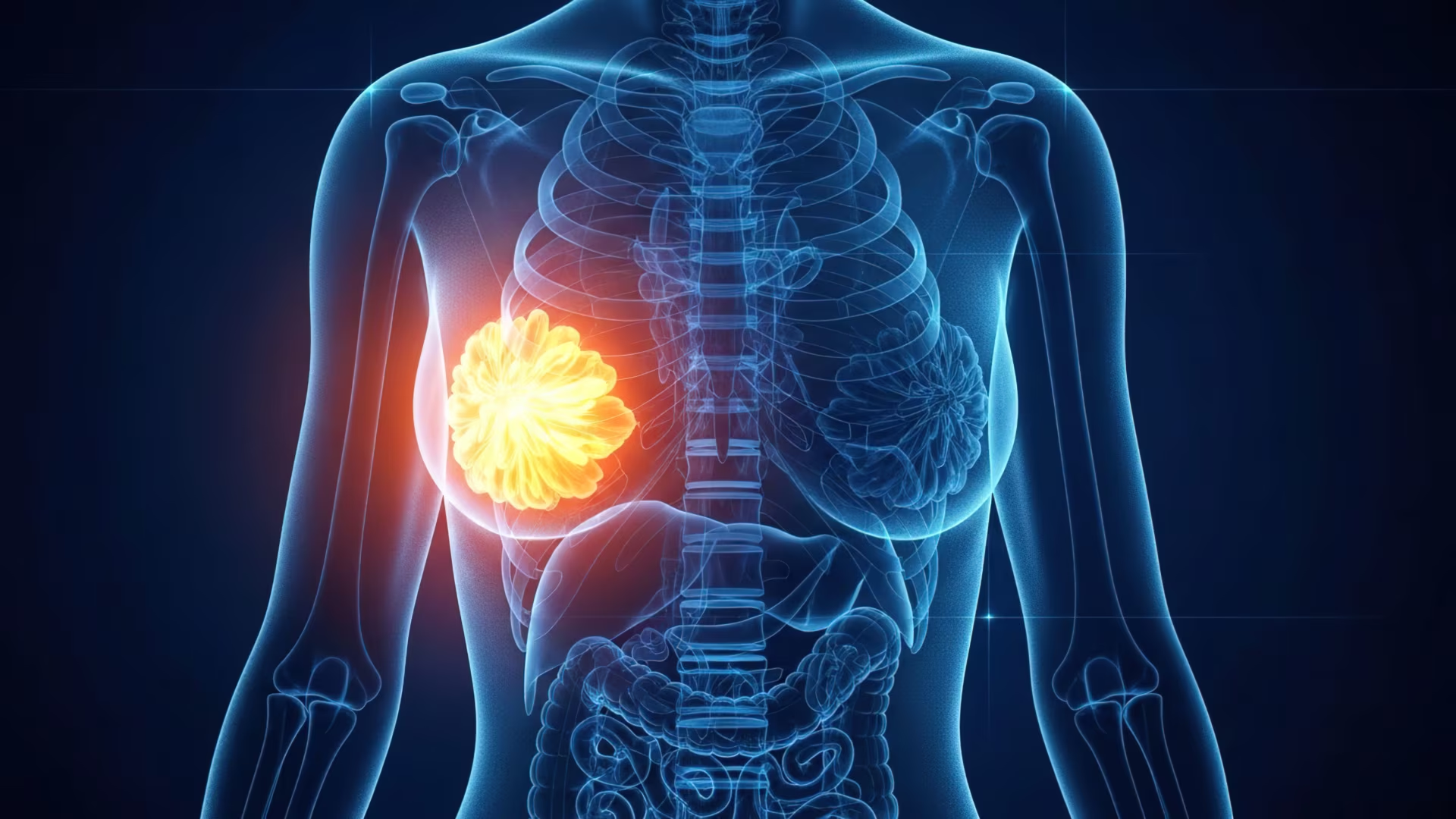
Tuberculous mastitis (TM) is a rare chronic granulomatous disease predominantly caused by Mycobacterium tuberculosis.1 TM accounts for less than 0.1% of all breast diseases worldwide, whereas it is more common in endemic regions (3–4.5%).2,3 TM is more prevalent in the reproductive age ...

We often focus on clinical excellence, but spend less time developing broader skills that could help us better lead with purpose and build more fulfilling, impactful careers. In this episode, part of a mini-series in partnership with LEADderm, Dr Jennifer Soung and Denise Mann explore how clinicians can engage with the media to educate, empower and extend their impact beyond the clinic.

Presented at CROI 2026, Prof. Kate Seib discusses we the biological rationale for cross-protection, interpretation of the GoGoVax trial findings, and what these results mean for future vaccine development and prevention counselling.

Vaccine confidence has been significantly challenged in the wake of the COVID-19 pandemic, with implications for routine immunization, vaccine catch-up and equitable access to care. In this Q&A, Prof. Nada M. Melhem, Professor of Infectious Diseases and Microbiology, ...

The STI & HIV World Congress is the leading global forum on sexually transmitted infections (STIs), HIV, and sexual health. Jointly organized by the International Society for Sexually Transmitted Diseases Research (ISSTDR) and the International Union Against Sexually Transmitted Infections (...

Dr Darius Hareza (Northwestern University, Chicago, USA) discusses major developments from IDWeek 2025, including the alarming rise in NDM-producing Enterobacterales, the approval of gepotidacin for gonorrhoea, and spirited debates around daptomycin versus vancomycin and new UTI treatment durations.

In this Q&A, Jarod Hanson, Chief Content Office of ProMED, in affiliation with ISID, discuss how the ProMED platform continues to empower clinicians and epidemiologists worldwide, its evolving integration of AI, and how new partnerships aim to extend its reach into low-resource settings to strengthen the global early warning system.

Bacterial vaginosis (BV) remains one of the most common vaginal infections worldwide, yet accurate diagnosis continues to challenge clinicians. In this expert interview, Dr Olivia Van Gerwen (University of Alabama at Birmingham) explores the limitations of current diagnostic tools, the impact of misdiagnosis and how advances in molecular and point-of-care testing could transform women’s sexual health practice.
In our inaugural touchINFECTIOUS DISEASES Future Leaders 2025 campaign, we celebrate early-career clinicians and researchers whose innovation, leadership, and curiosity are already shaping better outcomes in patient care, antimicrobial stewardship, and global health.

In this episode of Visionary Voices, we welcome Associate Professor Grace Vincent from CQUniversity’s Appleton Institute. A leading expert on sleep and shift work, Grace explores how disrupted sleep affects physician health in both the short and long term, as well as its impact on safety and performance. We also discuss what this means for patient outcomes and share practical strategies to manage sleep loss.

TNX 4800, a first-in-class, single-dose monoclonal antibody being developed as a seasonal prophylactic, akin to a ‘Lyme vaccine’, for the prevention of Lyme disease, has been had in-licencing announced. Designed for springtime administration, TNX 4800 provides passive immunity against Borrelia burgdorferi, the causative agent of Lyme disease, offering protection throughout the United States tick season.
Log into your Touch Account
Keep track of your clinical interests and newsletter subscriptions.
Sign up with an Email
Or use a .
Register now for FREE access
Already registered? Login below.