 Despite the success of antiretroviral therapy (ART) in achieving durable viral suppression, HIV persists in long-lived cellular reservoirs that remain a major barrier to cure. Among these, T follicular helper (Tfh) cells within lymph nodes represent an important tissue reservoir with unique immunological and anatomical characteristics. Recent research has begun to characterize how HIV integration sites and clonal expansion within these cells contribute to reservoir persistence during long-term ART.
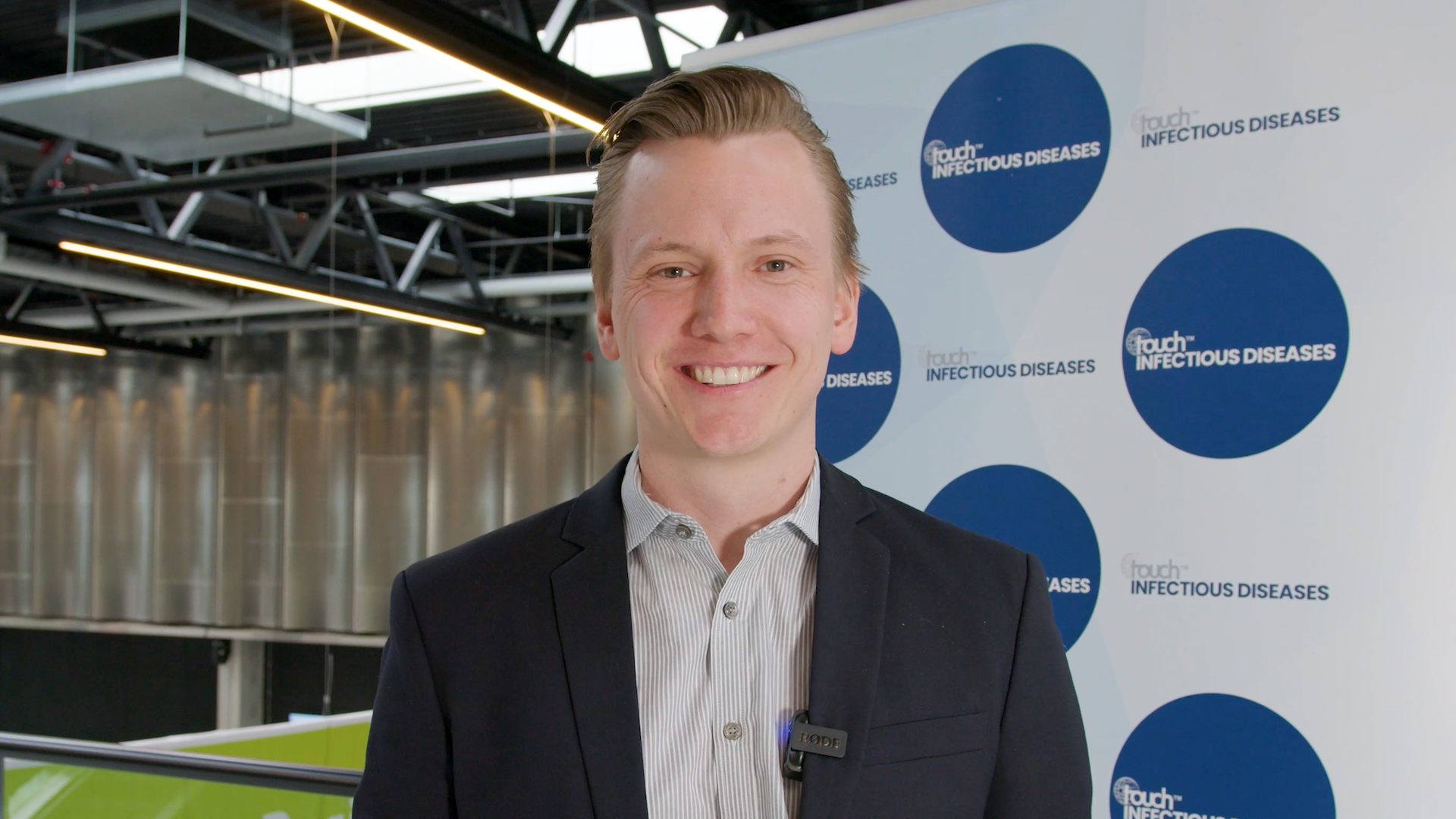
We spoke with Julienne Lehmann (HIV Cure Research Center, Ghent University, Ghent, Belgium) to discuss findings from the late breaking abstract Lymph Node Tfh Cells Form a Clonally Expanded, Epigenetically Active HIV Reservoir During ART. Abstract #404 at the Conference on Retroviruses and Opportunistic Infections (CROI) 2026, exploring what these results reveal about reservoir biology, anatomical heterogeneity and the implications for future HIV cure strategies.
Q. Why is it important to characterize HIV integration sites and clonal expansion within lymph node-derived T follicular helper (Tfh) cells during long-term ART?
Tfh cells are an important HIV reservoir in tissues and reside in germinal centres, a specialised microenvironment with limited access to cytotoxic CD8+ T cells. These factors pose a major obstacle for HIV cure strategies. Importantly, understanding where HIV is integrated can influence the status of the virus itself (active versus latent) and the status and function of the harbouring cells that constitute the reservoir..
We have shown that Tfh cells harbouring HIV expand during ART, based on the accumulation of cells with similar HIV integration sites. The detection of identical integration sites across multiple cells provides direct evidence of proliferation or preferential survival of infected clones during suppressive ART.
While clonal expansion has been described in viraemic individuals and in lymph nodes during ART, integration site analyses specifically focused on Tfh cells in lymph nodes under ART have been limited. In particular, the chromatin context and epigenetic landscape of these proviruses remain insufficiently defined.
Q. What does the finding of clonal expansion within LN Tfh cells during ART reveal about the persistence and transcriptional potential of the HIV reservoir?
The identification of substantial clonal expansion within lymph node–derived Tfh cells indicates that the HIV reservoir in this compartment is maintained through cellular proliferation or preferential survival. Identifying the antigens driving this expansion, or the mechanisms leading to preferential survival of infected cells, can guide strategies aimed at eliminating these cells or suppressing their expansion.
Q. How do the distinct integration landscapes observed in tissue-resident Tfh cells, compared with peripheral blood CD4+ T cells, refine our understanding of anatomical reservoir heterogeneity?
Our data suggest that the integration landscape in lymph node–derived Tfh cells evolves depending on infection stage and treatment status. During both acute and chronic untreated infection, the overall integration landscape in Tfh cells appeared relatively similar to that observed in peripheral blood–derived CD4+ T cells, consistent with HIV’s known preference for integrating into transcriptionally active regions of the genome. This suggests that during ongoing viraemia, integration site distribution largely reflects viral integration preferences rather than strong compartment-specific selection.
In contrast, in individuals receiving ART, we observed an enrichment of integration sites within regions predicted to be transcriptionally active in Tfh cells in tissues. Notably, the majority of clonally expanded integration sites were located within these predicted active regions.
Together, these findings support the concept that the HIV reservoir is not uniform across anatomical compartments. Instead, tissue-specific cellular dynamics and chromatin landscapes appear to shape which infected clones persist during ART, reinforcing the importance of considering anatomical heterogeneity in cure strategies.
Q. In light of these findings, how should HIV cure strategies evolve to better address tissue-specific reservoirs and epigenetically active integration sites?
Our findings highlight the need for cure strategies that directly address tissue-specific reservoirs and the biological mechanisms sustaining them.
If clonal expansion is a dominant mechanism maintaining infected Tfh cells during ART, suppressing viral replication alone will not be sufficient for eradication. Cure strategies must also target the survival and proliferative capacity of infected cells within lymphoid tissues. Moreover, the enrichment of integration sites in predicted transcriptionally active chromatin regions suggests that some clonally expanded proviruses may retain reactivation potential.
Future cure approaches must therefore take into consideration tissue biology and target transcriptionally competent clones within lymphoid reservoirs. Understanding integration site distribution in anatomical compartments such as lymph nodes is essential for the rational development of interventions aimed at durable remission or eradication.
Q. What were the most important therapeutic and treatment updates presented at CROI 2026?
At CROI 2026, some of the most exciting therapeutic advances were in long-acting prevention and immune-based cure strategies. One major highlight was the continued development of lenacapavir-based prevention strategies. The possibility of once- or even twice-yearly PrEP dosing represents a potentially transformative shift in HIV prevention, with the promise of greatly improving adherence and global accessibility.
On the cure front, immune-modulating approaches gained significant attention. Strategies targeting PD-1 aim to reinvigorate exhausted HIV-specific T cells, while broadly neutralising antibodies (bNAbs) are being explored for their ability to delay viral rebound and potentially support post-treatment control.
Already registered? Login below.
Related content
Expanding first-line HIV options: MK-8591A-053 week 48 data on DOR/ISL in treatment-naïve adults
Why did 4CMenB fail to prevent gonorrhoea? Clinical implications from the GoGoVax trial
More content in HIV
Cite: Julienne Lehmann. The future of HIV cure strategies: Clonal expansion in lymph node Tfh cells. touchINFECTIOUS DISEASES. 09 March 2026.
Abstract: Lehmann J et al. Lymph Node Tfh Cells Form a Clonally Expanded, Epigenetically Active
HIV Reservoir During ART. Abstract #404. Presented at CROI 2026, February 22-25 2026, Denver, CO, USA.
Editor: Katey Gabrysch, Editorial Director.
Disclosures: Julienne Lehmann has nothing to disclose in relation to this interview.
The content was developed and edited by human editors. No fees or funding were associated with its publication. touchINFECTIOUS DISEASES utilize AI as an editorial tool (ChatGPT (GPT-4o) [Large language model]. https://chat.openai.com/chat).
This content has been developed independently by Touch Medical Media for touchINFECTIOUS DISEASES in collaboration with Julienne Lehmann. Views expressed are the speaker’s own and do not necessarily reflect the views of Touch Medical Media.
SIGN UP to touchINFECTIOUS DISEASES!
Join our global community today for access to thousands of peer-reviewed articles, expert insights, and learn-on-the-go education across 150+ specialties, plus concise email updates and newsletters so you never miss out.