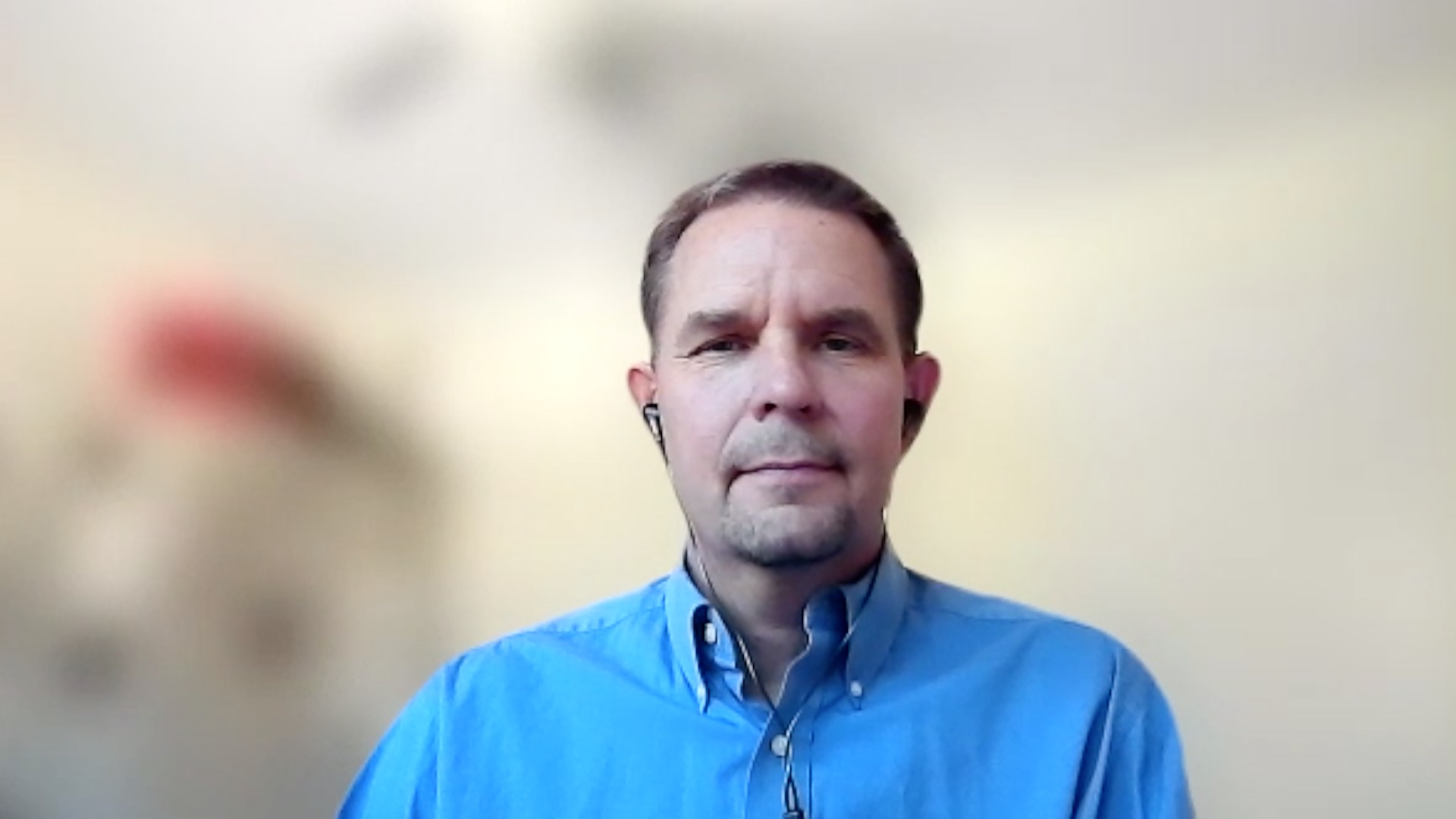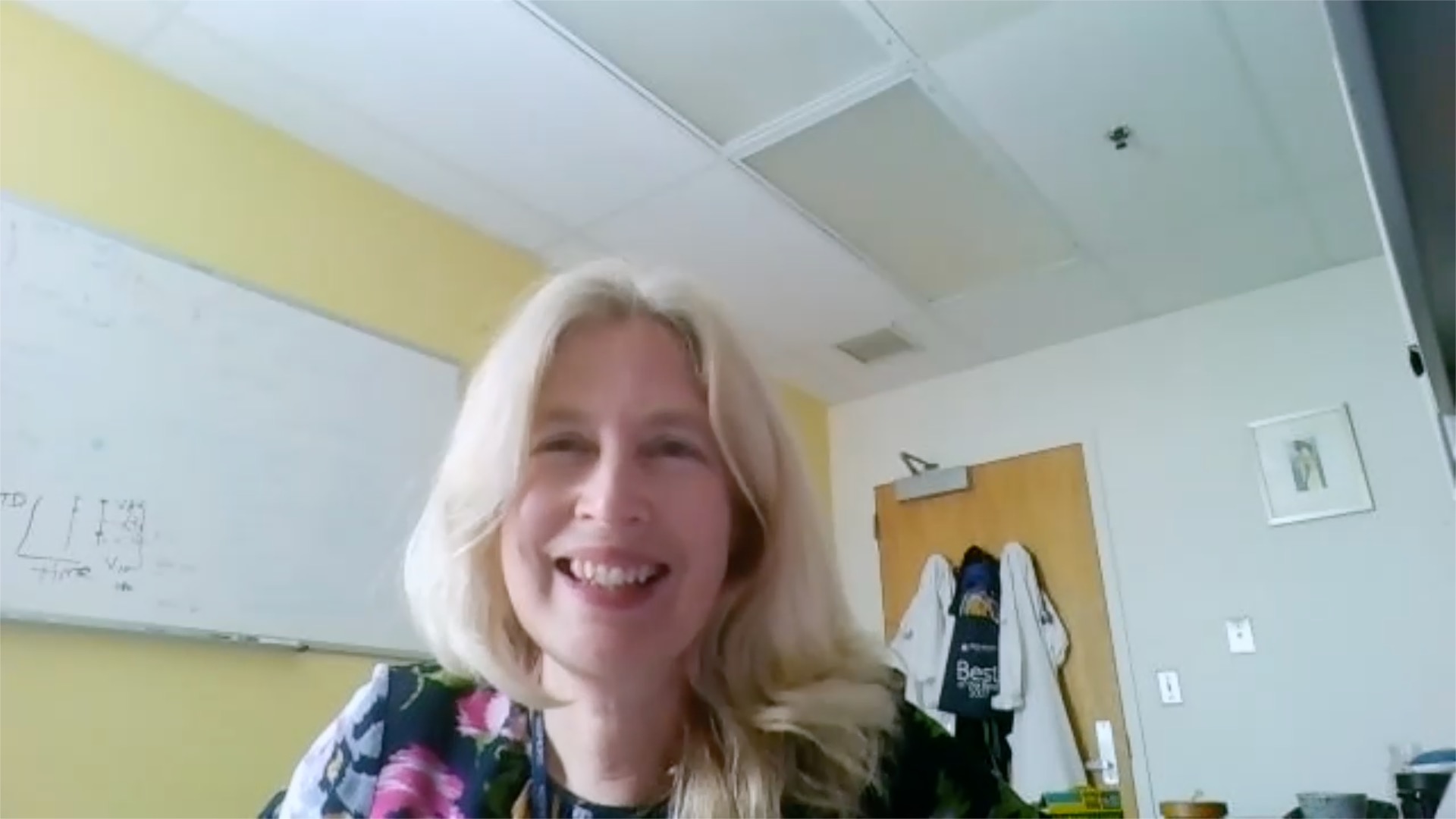
 At ESCMID 2026, Dr Daniel Pan discusses his research into respiratory virus transmission, health inequalities and the development of new approaches to measuring individual infectiousness.
Recognized as a touchINFECTIOUS DISEASES Future Leader 2026 and recipient of a Young Investigator Award, Dr Pan reflects on the significance of this recognition, the lessons learned from the COVID-19 pandemic and why transmission science may shape the next decade of infectious diseases research. He also explains how novel mask-based sampling tools could improve clinical decision-making and outbreak control.
Presented at ESCMID 2026: Can we develop better tests to measure individual infectiousness in respiratory virus infections? Young Investigator Award lecture
Q. Could you tell us a little about your background and current role?
I am an infectious diseases specialist registrar, which is the stage before consultant in the UK system. I am currently training in infectious diseases and general internal medicine. I have been based in Leicester since 2019, and before that I trained in London and Hull.
Q. Congratulations on being recognized as a touchINFECTIOUS DISEASES Future Leader and on your Young Investigator Award at ESCMID. What does this recognition mean to you at this stage of your career?
Thank you. It is a huge honor. This is a highly competitive award and, at my stage of training, it is probably one of the biggest awards an infectious diseases research trainee can receive. You are competing with trainees from around the world, and your work is judged by internationally respected experts and professors. That gives it real significance. It feels like recognition from the wider field that the work has value.
It also helps with imposter syndrome. When you are doing research within a small team, or sometimes largely on your own, it can be difficult to know how far the work can go or how strong it really is. Receiving an award like this gives external validation that the research matters and is worth pursuing further.
That is especially important as a medical trainee, because you are effectively doing two jobs at once. You are trying to develop clinically while also trying to build a research career. If I had to choose one, I would always be a doctor first. But achievements like this help reinforce that the research is highly important, and should continue.
And then finally, there’s a practical side. It means I can put it on my CV, and when I apply for funding, I can show objective evidence that the work has been recognized. That will hopefully help me keep building things in the future.
Q. Your work has spanned infectious diseases, public health and respiratory virus transmission. What key themes have shaped your research journey so far?
It really began with health inequalities and differences in infection outcomes between ethnic groups. Leicester is an excellent place to train in infectious diseases because it is an incredibly diverse city, with no single ethnic majority. Many communities also maintain close international ties and travel frequently to visit family abroad, so you see a very broad range of infectious diseases.
When the COVID-19 pandemic began, Leicester was one of the first places to observe that ethnic minority communities were being disproportionately affected. We saw that outcomes were worse, and we wanted to understand why. That was where my research really took off. I was also seriously ill with COVID myself and required intensive care, so there was probably a personal motivation there as well.
As we looked more closely, it became clear that these differences were not primarily driven by biology. They were driven largely by social factors. Many ethnic minority communities were more likely to live in larger households, were less able to isolate, and were more likely to work in frontline or key worker roles. That meant higher exposure risk and therefore higher rates of infection.
That distinction matters greatly for public health messaging. We should not frame ethnicity itself as the risk factor. Rather, we need to understand the social and structural factors that increase vulnerability. From there, my work moved into understanding infectiousness itself. We realized that a positive swab does not always mean someone is infectious, and a negative swab does not always mean they are not. That led us to develop a new mask-based sampling system in Leicester that measures what a person is breathing out, which may be a better reflection of what others are exposed to.
Q. Focusing on your ESCMID presentation, can we develop better tests to measure individual infectiousness in respiratory virus infections, and how could this change clinical practice and outbreak control?
Yes, I think we can, and that is what makes this field exciting. We have accepted for a long time that swabs are the standard test. Swabs are very useful diagnostically, but we also tend to use them as a proxy for infectiousness. That is not always accurate.
We also often assume that symptoms equal infectiousness. In reality, our work and the work of others suggest that people can be most infectious in the one to two days before symptoms begin. So there is often a disconnect between symptom onset and peak transmission risk. That has important implications. For example, in hospitals, healthcare workers already wear masks in many settings. If those masks also functioned as sampling devices, they could potentially indicate whether someone is infectious in real time. That could help protect vulnerable patients while also avoiding unnecessary isolation.
Similarly, for patients in side rooms or isolation areas, better tools could help determine when they are no longer infectious, allowing more efficient use of hospital space and resources. Scientifically, it also changes how we think about testing. Instead of using one sample type for every purpose, we may need different compartments for different questions. A swab may help diagnose infection. Breath sampling may better reflect transmission risk. Other sample types may tell us more about severity or immune response. It opens an entirely new way of thinking about respiratory virus biology.
There are also implications for vaccine and antiviral studies. At present, we often measure severe outcomes or antibody responses. But what if we could directly measure whether an intervention reduces onward transmission? That would be incredibly valuable.
Q. As an emerging leader in the field, what opportunities or challenges do you think will define the future of infectious diseases research over the next decade?
Infectious diseases research is becoming increasingly molecular. Traditionally, much of the field focused on classical microbiology and in vitro pathogen studies. Increasingly, we are now moving into metagenomics, sequencing, molecular diagnostics and highly data-driven approaches.
Artificial intelligence will also become important, as it will across every field. It is difficult to talk about the future of research without considering how AI can support discovery, diagnostics and systems-level analysis.
In my own area of respiratory viruses, I think transmission science will become increasingly central. If you prevent transmission, you prevent everything that follows, disease, complications and healthcare burden.
We already see this reflected in vaccine development. Many traditional vaccines reduce symptomatic disease but may not fully prevent acquisition or transmission. That is one reason why mucosal vaccines are so exciting. Delivered intranasally, they may generate both systemic and local immune responses that better prevent infection and onward spread. I think transmission-focused science will become a major growth area.
Q. Who have been the key mentors or influences in your career so far?
I have been fortunate to have many mentors, and it is not something anyone does alone. Clinically, several people inspired me to pursue infectious diseases as a career.
But I would say mentorship often develops naturally through the work itself. I did not begin by trying to build a long list of mentors. It started with one or two people, and as the research developed, more relationships formed. If I were advising trainees, I would say focus first on doing good work. As the work becomes stronger and more interesting, mentors and collaborators tend to follow.
Q. What were your highlights, and what do you think will be the most important updates presented at ESCMID 2026?
At an earlier stage of my career, the highlights would have been the Young Investigator sessions and the major award lectures. Those are fantastic opportunities to see what leading researchers are doing and where the field is heading.
I also always value the update sessions in infectious diseases, microbiology and tropical medicine. They are an efficient way to stay current with the most important developments.
At this stage, conferences are a little different for me because I am presenting and meeting collaborators, mentors, industry colleagues and new contacts. So for me now, one of the biggest values of ESCMID 2026 is the opportunity to reconnect with people, develop new ideas and build future projects. I think one misconception younger attendees sometimes have is that networking means aggressively approaching everyone. For me, it is much more natural than that. You keep showing up, do the work well, presenting work, talking to people, and over time those relationships develop organically.
Already registered? Login below.
Related content
Respiratory virus transmission and new approaches to measuring individual infectiousness
New evidence for high-dose influenza vaccines in older adults: DANFLU-2 trial
Pritelivir shows superior lesion healing in refractory herpes simplex virus: Phase III PRIOH trial
More content in Respiratory Infections
Cite: Daniel Pan. Respiratory virus transmission, health inequalities and new approaches to measuring individual infectiousness. touchINFECTIOUS DISEASES. 17 March 2026.
Abstract: Daniel Pan. Can we develop better tests to measure individual infectiousness in respiratory virus infections? Presented at ESCMID 2026, Munich, Germany 17 – 21 April 2026
Editor: Katey Gabrysch, Editorial Director.
Disclosures:
The content was developed and edited by human editors. No fees or funding were associated with its publication. touchINFECTIOUS DISEASES utilize AI as an editorial tool (ChatGPT (GPT-4o) [Large language model]. https://chat.openai.com/chat).
This content has been developed independently by Touch Medical Media for touchINFECTIOUS DISEASES in collaboration with Daniel Pan. Views expressed are the speaker’s own and do not necessarily reflect the views of Touch Medical Media.
SIGN UP to touchINFECTIOUS DISEASES!
Join our global community today for access to thousands of peer-reviewed articles, expert insights, and learn-on-the-go education across 150+ specialties, plus concise email updates and newsletters so you never miss out.