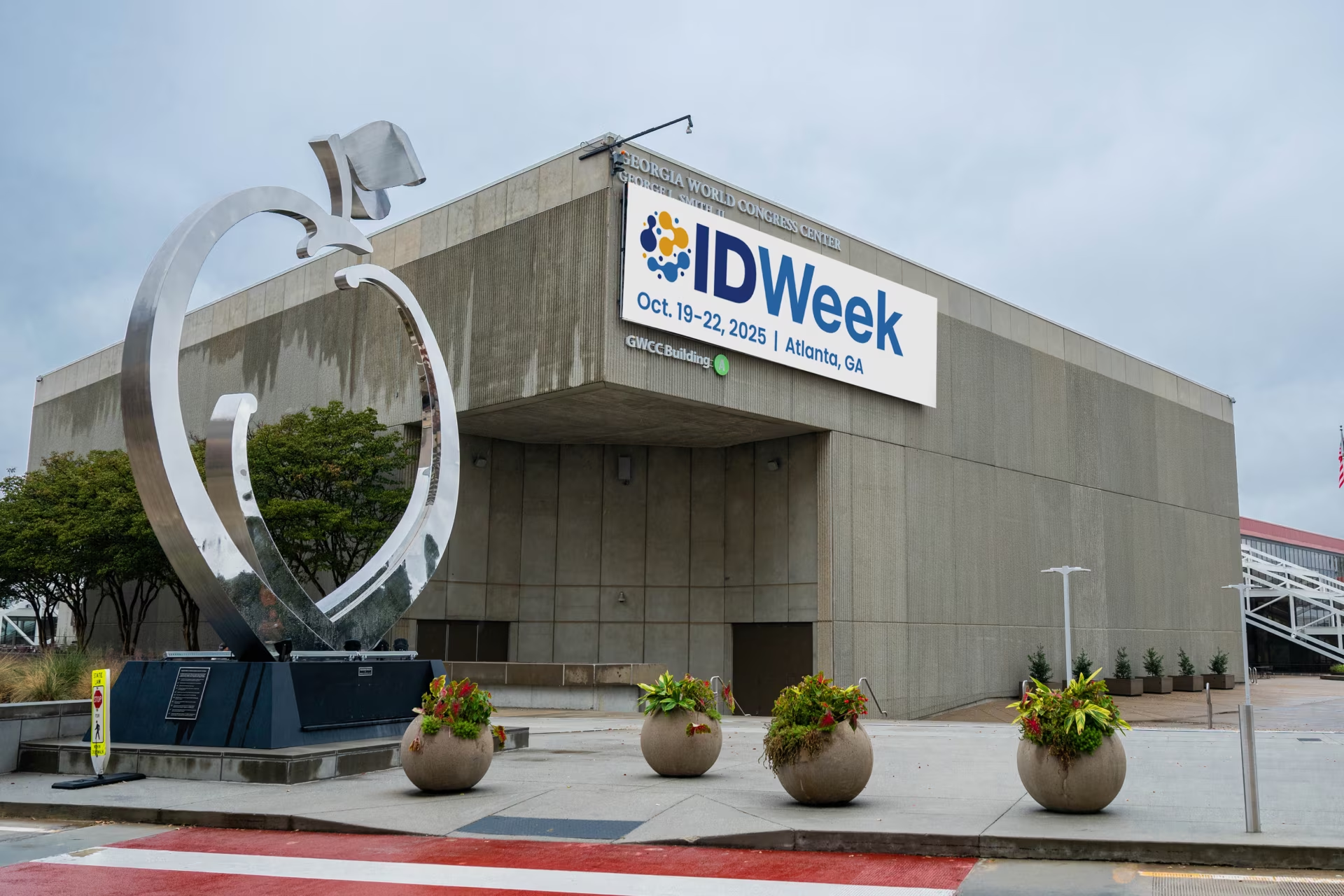
Photography Credit: Kelli Price
Photography, IDWeek 2025
At IDWeek 2025, held in Atlanta, GA, USA, researchers presented pivotal late-breaking data spanning viral and bacterial infections. This article highlights the session, and reveals advances in vaccine development, antimicrobial innovation, and HIV prevention, highlighting how new therapeutics and cost-effective strategies are reshaping infectious disease management worldwide.
Session: IDWeek 2025 – Late Breaking Trial Results for Viral and Bacterial Infections
Article highlights
- A live attenuated Shigella sonnei vaccine (WRSs2) achieved up to 100 % protection in a controlled human challenge.
- First-in-class allosteric HIV-1 integrase inhibitor pirmitegravir (STP0404) showed strong antiviral efficacy and tolerability in a phase 2a proof-of-concept trial.
- Oral carbapenem tebipenem pivoxil hydrobromide demonstrated non-inferior efficacy to intravenous imipenem-cilastatin for complicated urinary tract infection.
- Updated cost-model analysis suggested generic lenacapavir pre-exposure prophylaxis could be produced for US $25 per person-year, greatly improving global access.
- A next-generation oral norovirus vaccine candidate induced significantly higher neutralizing antibody responses than the first-generation formulation.
WRSs2 vaccine shows exceptional protection against Shigella sonnei1
Dr Robert Frenck Jr (Cincinnati Children’s Hospital Medical Center, OH, USA) presented findings from a randomized challenge study assessing the live attenuated S. sonnei vaccine WRSs2 (ClinicalTrials.gov identifier: NCT05787946).
Adults aged 18-49 years received 1 or 2 oral doses of 10⁶ colony-forming units (cf u) WRSs2 or placebo 28 days apart before challenge with wild-type S. sonnei 53G.
Among participants receiving two doses, vaccine efficacy reached 89 % (95 % confidence interval [CI] 71–96; p < 0.001), with only 9 % developing shigellosis compared with 81 % in the placebo arm. No shigellosis occurred among one-dose vaccine recipients (vaccine efficacy = 100 %; 95 % CI 71–100). The vaccine was well tolerated; two participants experienced grade 3 diarrhoea that resolved with dose adjustment.
Robust serum IgA and IgG responses to lipopolysaccharide and Invaplex antigens were seen in 45–73 % of vaccinees compared with ≤ 6 % of placebo recipients. These results provide the strongest human challenge evidence to date that a live attenuated oral S. sonnei vaccine can confer high-level protection, warranting progression to large-scale field trials in endemic regions.
Pirmitegravir: a new class of HIV-1 inhibitor enters proof-of-concept phase
Dr Xue Meng (ST Pharm Co Ltd, Seoul, Republic of Korea) reported interim phase 2a results for pirmitegravir (STP0404; ClinicalTrials.gov identifier: NCT05869643), the first HIV-1 allosteric integrase inhibitor (ALLINI) to reach human testing. Sixteen adults with untreated or minimally pre-treated HIV-1 received pirmitegravir 200 mg or 400 mg once daily for 10 days versus placebo.
Both pirmitegravir arms achieved significant viral load declines of 1.18–1.56 log₁₀ copies/mL by day 11 (p < 0.0001). The agent was well tolerated, with no serious or severe adverse events and no discontinuations. Pharmacokinetic analysis showed median Tmax 4.5–5.5 h and half-lives of ≈ 12 h with linear, dose-independent exposure.
Pirmitegravir’s distinct resistance profile and oral dosing may complement existing integrase strand transfer inhibitors (INSTIs) to expand options for antiretroviral therapy. A 600 mg cohort and combination-therapy trials are planned for 2026
Oral carbapenem tebipenem pivoxil hydrobromide proves non-inferior to intravenous therapy
Dr David K. Hong (Spero Therapeutics Inc., Cambridge, MA, USA) presented the PIVOT-PO trial (NCT06059846), a global phase 3 double-blind study comparing oral tebipenem pivoxil hydrobromide (TBP-PI-HBr) with intravenous imipenem-cilastatin (IMI-CIL) for complicated urinary tract infection (cUTI) or acute pyelonephritis (AP).
Among 929 hospitalised adults, the overall response (clinical cure plus microbiological eradication at test-of-cure) was 58.5 % for TBP-PI-HBr versus 60.2 % for IMI-CIL (adjusted difference −1.3 %; 95 % CI −7.5 to 4.8), confirming non-inferiority. Efficacy was maintained in extended-spectrum β-lactamase-positive Enterobacterales subgroups.
The two most common adverse events were diarrhoea and headache, and no new safety signals emerged. These results position TBP-PI-HBr as a potential first-in-class oral carbapenem option that could enable earlier discharge and reduce IV antibiotic dependence
Generic lenacapavir for HIV prevention: Cost model supports global scale-up
Dr Andrew Hill (University of Liverpool, UK) presented an updated economic analysis estimating that generic lenacapavir pre-exposure prophylaxis (PrEP) could be produced for as little as US $25 per person-year, compared with the current list price of ≈ $28,000.
Using June 2025 cost data for key starting materials and active pharmaceutical ingredient routes of synthesis, the projected cost of-goods was US $6,340–8,921/kg of API. At a production scale of five million treatment-years, finished product cost could fall to $25 per year.
Given UNAIDS estimates of 1.3 million new HIV infections in 2023 and potential future demand of > 50 million treatment-years annually, generic lenacapavir could become a transformative, cost-effective PrEP option if licensing and funding frameworks support global manufacturing access.
Next-generation oral norovirus vaccine improves immune response
Nicholas J. Bennett, MBBChir, PhD (Vaxart Inc., South San Francisco, CA, USA) reported on a phase 1 open-label trial comparing Vaxart’s second-generation oral bivalent norovirus vaccine (SGV) with the earlier formulation (FGV). Sixty healthy adults received low- or high-dose SGV or high-dose FGV and were followed for safety and immunogenicity over 28 days (NCT06115278).
All reported adverse events were mild to moderate, with headache most common (16.7 %). The high-dose SGV elicited significantly higher geometric mean fold rises in blocking antibody titres for both GI.1 (5.4 vs 2.2) and GII.4 (3.7 vs 1.9; p < 0.05) compared with FGV, and broader cross-reactive responses to multiple genotypes.
These data demonstrate that optimising antigen and non-coding sequences can substantially enhance oral norovirus vaccine immunogenicity without compromising safety, supporting progression to phase 2 evaluation
Conclusion
The IDWeek 2025 late-breaker session highlighted rapid innovation across bacterial and viral disease research, from vaccines for Shigella and norovirus, to next-generation HIV therapeutics and affordable global prevention strategies. Together, these trials demonstrate how advances in vaccine engineering, antiviral mechanisms and economic access models are reshaping the infectious diseases landscape.
Photography Credit: Kelli Price
Photography, IDWeek 2025
Related content
NDM resistance trends and novel antibacterials: Key insights at IDWeek 2025
ProMED: Strengthening global outbreak vigilance through human-curated intelligence
Bacteriophage therapy: A powerful alternative to antibiotics in the fight against superbugs
This content has been developed independently by Touch Medical Media for touchINFECTIOUS DISEASES. Views expressed are the speaker’s own and do not necessarily reflect the views of Touch Medical Media.
Session: 72 – Late Breaking Trial Results for Viral and Bacterial Infections. Oral Abstracts. IDWeek 2025, Los Angeles, CA, USA. 9–13 October 2025.
Editor: Katey Gabrysch, Editorial Director.
Disclosures: This short article was prepared by touchINFECTIOUS DISEASES in coverage of IDWeek 2025, Session: “Late Breaking Trial Results for Viral and Bacterial Infections”. The content was developed and edited by human editors. No fees or funding were associated with its publication. touchINFECTIOUS DISEASES utilize AI as an editorial tool (ChatGPT (GPT-4o) [Large language model]. https://chat.openai.com/chat). Mitchell Warren has nothing to disclose in relation to this interview.
Cite: Late-breaking IDWeek 2025: Novel vaccines, antimicrobial agents and preventive strategies. touchINFECTIOUS DISEASES. 30 October 2025.
References
- Frenck RW Jr et al. Efficacy and immunogenicity of WRSs2, a live attenuated Shigella sonnei vaccine candidate, to protect against shigellosis after challenge with wild-type S. sonnei 53G. Presented at: IDWeek 2025; Los Angeles, CA, USA; 9–13 October 2025. Abstr #LB001.
- Meng X et al. The first proof-of-concept clinical trial of an HIV-1 allosteric integrase inhibitor, pirmitegravir (STP0404). Presented at: IDWeek 2025; Los Angeles, CA, USA; 9–13 October 2025. Abstr #LB002.
- Hong DK et al. Oral tebipenem pivoxil hydrobromide versus intravenous imipenem-cilastatin in patients with complicated urinary tract infection or acute pyelonephritis: results from the phase 3 PIVOT-PO study (NCT06059846). Presented at: IDWeek 2025; Los Angeles, CA, USA; 9–13 October 2025. Abstr #LB003.
- Hill A et al. Generic lenacapavir HIV pre-exposure prophylaxis could be produced for $25 per person per year. Presented at: IDWeek 2025; Los Angeles, CA, USA; 9–13 October 2025. Abstr #LB004.
- Bennett NJ et al. An open-label phase 1 clinical trial demonstrating improved immune responses to norovirus strains GI.1 and GII.4 from a second-generation oral bivalent vaccine candidate. Presented at: IDWeek 2025; Los Angeles, CA, USA; 9–13 October 2025. Abstr #LB005.
Register now to receive the touchINFECTIOUS DISEASES newsletter!
Don’t miss out on hearing about our latest peer reviewed articles, expert opinions, conference news, podcasts and more.