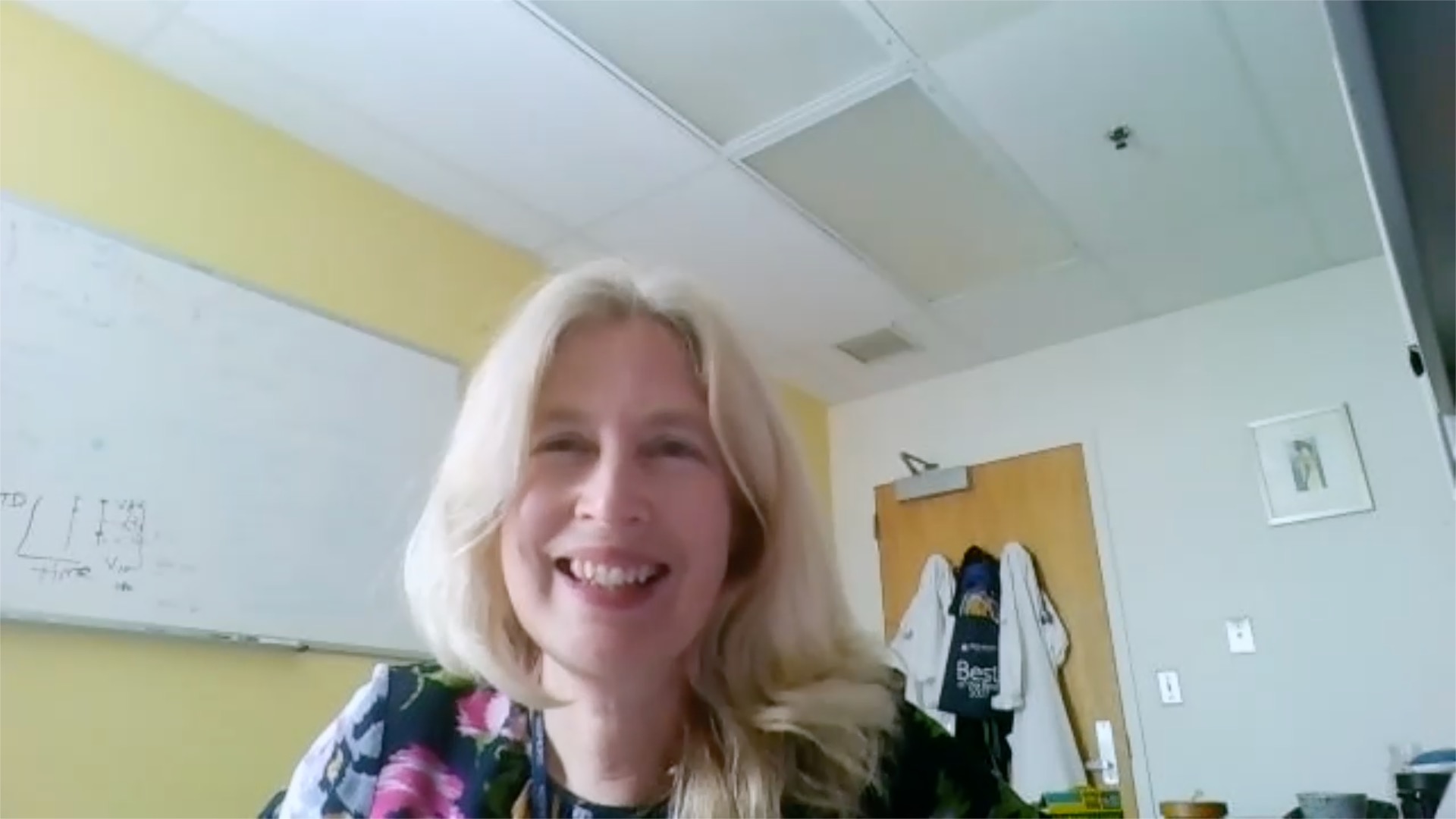
 At ESCMID Global 2026, Prof. Holly Seale (University of New South Wales in Sydney, Australia) emphasized the importance of bringing together clinical, behavioral, and public health expertise when preparing for future respiratory threats.
As innovation accelerates across vaccines, diagnostics, therapeutics, and surveillance, Prof. Seale argues that scientific advances alone are not enough. Public trust, communication, and meaningful engagement remain essential for successful implementation. In this interview, she explains why multidisciplinary collaboration is critical to pandemic preparedness and why social science must have a stronger voice in global infectious diseases discussions.
Presented at ESCMID 2026: Using AI-enabled diagnostics to strengthen biosecurity and address gaps in servicing remote populations
Q. Could you tell us a little about yourself, your background and your current research?
My name is Holly Seale, and I am a social scientist and Professor in the School of Population Health at the University of New South Wales in Sydney, Australia.
My work focuses on how we connect communities, healthcare providers, and health systems with public health strategies. It is wonderful to have a new vaccine, a new treatment, or another mitigation tool, but that does not automatically mean communities will trust it or adopt it.
That is where I come in. My research looks at the policy, program, and systems factors, right through to the individual behavioral drivers, that influence whether people engage with healthcare recommendations.
Q. What barriers need to be addressed for AI-enabled diagnostics to gain trust and adoption in remote and underserved communities?
There have been many excellent presentations at this conference about the potential of AI. I attended the sepsis session yesterday, for example, where speakers discussed how AI could be used across the patient pathway.
The challenge is that many of these studies are conducted in very high-resource settings—places with funding, staffing, infrastructure, and time to support implementation. But when we step outside those environments and into lower-resource settings, the realities can be very different.
My current work includes case studies in the Solomon Islands and rural Bangladesh. In the Solomon Islands, many communities live on small remote islands far from the capital. Healthcare is often delivered through very small local clinics with minimal equipment, limited staff, and sometimes no reliable electricity. Patients may walk for hours to reach care.
In rural Bangladesh, healthcare may be provided by informal drug vendors or village doctors with little formal training or regulation. Treatment decisions are often based on past experience and what medicines happen to be available.
So before we talk about implementing AI in these settings, we need to understand the foundations: access to electricity, digital infrastructure, digital literacy, workforce capacity, and whether AI is even a local priority.
AI may eventually play an important role—but in many places, there are more immediate system barriers that need to be addressed first.
Q. How can AI tools be designed to strengthen biosecurity and surveillance while still supporting patient-centered care and community engagement?
I think AI absolutely has future potential in this area. We have already seen mobile health technologies used successfully in many low- and middle-income countries, so it is not unrealistic to think AI systems could also become part of community care.
But they need to be designed for the realities of those settings. That means tools that can function with limited staffing, tools that can be used by people with different levels of training, and tools that can operate offline rather than relying on constant internet access. They also need to be informed by local data and local community knowledge. That is critical.
If you build an AI system in a high-income country hospital, it may draw on years of electronic medical records and highly structured datasets. In many of the settings where I work, records may still be paper-based—or not documented at all.
For example, in some of our antibiotic stewardship work in Bangladesh, antibiotic use is not systematically recorded. So yes, AI may eventually help with surveillance and monitoring, but building those systems will take time, investment, and local collaboration.
Q. What role do behavioral, cultural, and health equity factors play when implementing AI-enabled diagnostics for respiratory infections in remote populations?
They all play a central role. I recently read a quote saying that AI has the potential to support equity, but if poorly implemented, it could also deepen existing inequities. I think that is exactly right.
Historically, we have seen many examples where a research group enters a setting, pilots a promising technology, and then leaves. Once they leave, the system falls over because no one is there to maintain the software, support the hardware, train users, or sustain the program. So implementation is not just about the tool itself. It is about the package around it: training, maintenance, trust-building, governance, and long-term support.
We also need to think carefully about ethics, data sovereignty, and ownership. Where is the data coming from? Who controls it? How is it being used to inform decision-making?
Those are major issues, and in many cases they need to be addressed before we even begin discussing large-scale rollout.
Q. What are the next steps for your own work in this area?
For me, it always starts with the end users. We need to ask communities and healthcare workers what their priorities are. If a new system is not solving a problem they see as urgent, then adoption is unlikely, no matter how advanced the technology may be.
We need to listen to context, build with users, and co-design solutions that fit the local environment. Across public health, we know interventions are more successful when the people using them help shape them.
I am also very interested in who is designing these technologies. Are tech experts from low- and middle-income countries involved? Are local AI skills being developed? Or are systems still being designed in high-income countries and then pushed downward?
My sense is that too much is still top-down. Ideally, we should be investing in local expertise and enabling countries to build the systems they actually need.
Already registered? Login below.
Related content
Vaccine strategies shaping prevention of respiratory infections
Respiratory virus transmission and new approaches to measuring individual infectiousness
New evidence for high-dose influenza vaccines in older adults: DANFLU-2 trial
More content in vaccines and respiratory infections
Cite: Holly Seale. AI in infectious disease care: Trust, adoption and barriers in remote and underserved settings. touchINFECTIOUS DISEASES. 17 March 2026.
Abstract: Holly Seale. Using AI-enabled diagnostics to strengthen biosecurity and address gaps in servicing remote populations. Presented at ESCMID 2026, Munich, Germany 17 – 21 April 2026
Editor: Katey Gabrysch, Editorial Director.
Disclosures:
The content was developed and edited by human editors. No fees or funding were associated with its publication. touchINFECTIOUS DISEASES utilize AI as an editorial tool (ChatGPT (GPT-4o) [Large language model]. https://chat.openai.com/chat).
This content has been developed independently by Touch Medical Media for touchINFECTIOUS DISEASES in collaboration with Holly Seale. Views expressed are the speaker’s own and do not necessarily reflect the views of Touch Medical Media.
SIGN UP to touchINFECTIOUS DISEASES!
Join our global community today for access to thousands of peer-reviewed articles, expert insights, and learn-on-the-go education across 150+ specialties, plus concise email updates and newsletters so you never miss out.