This website is intended for healthcare professionals only

Trending Topic

Female breast anatomy glowing orange, 3d Medical illustration, women's health
12 mins

Trending Topic

Developed by Touch
Mark CompleteCompleted
BookmarkBookmarked
Aqsa Jawaid Siddiqui, Aamir Sikandar Kazi, Ghina Shamim Shamsi

Tuberculous mastitis (TM) is a rare chronic granulomatous disease predominantly caused by Mycobacterium tuberculosis.1 TM accounts for less than 0.1% of all breast diseases worldwide, whereas it is more common in endemic regions (3–4.5%).2,3 TM is more prevalent in the reproductive age group, especially during the lactation period, when patients are more susceptible since the […]

Disruptions to the United States’ Research Portfolio in 2025 and Potential Global Consequences

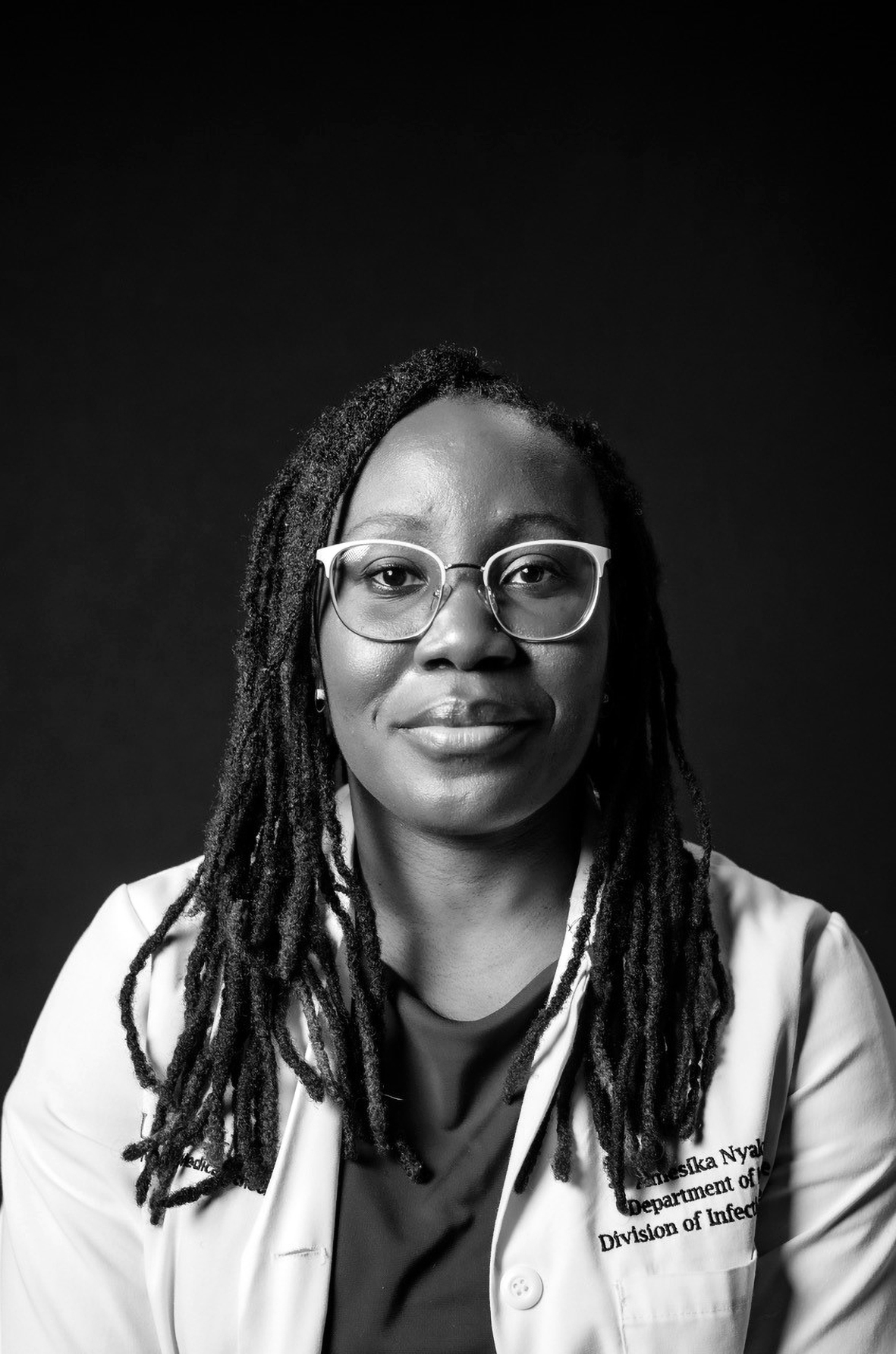
Joshua Craft, Amesika N Nyaku
4 mins
Share
Facebook
X (formerly Twitter)
LinkedIn
Via Email
Mark CompleteCompleted
BookmarkBookmarked
Copy LinkLink Copied
Download as PDF
Published Online: Nov 6th 2025 touchREVIEWS in Infectious Diseases. 2025;4(1):2-3 DOI: https://doi.org/10.17925/ID.2025.4.1.4
Select a Section…
1

Abstract

Overview

In the first months of 2025, the new US administration has imposed sweeping research funding cuts and dismantled longstanding global collaborations. This editorial examines recent global health breakthroughs made possible by USsupported science, highlights areas where progress is now being systematically undermined and considers the immediate and long-term consequences of these policy shifts. We argue that the emerging anti-science agenda threatens human health today and jeopardizes the future of biomedical innovation and global solidarity.

Keywords
2

Article

At the start of 2025, the world was healthier and safer because of the USA’s longstanding commitment to biomedical research.1–3 Further progress was on the horizon as healthcare providers delivered new interventions targeting the leading infectious causes of illness and death worldwide.

For instance, in the latest phase of one of global health’s most significant milestones, more countries were rolling out recently approved malaria vaccines to children living in endemic regions.4 As a result of these efforts, tens of thousands of children will now live to see their fifth birthdays.4 The revolutionary vaccines are the result of decades of research efforts supported by the US government.5 Private enterprise alone would never have produced such results, as the risks were too high and the financial incentives were too low. Only sustained public leadership could have delivered such a success to the world’s most neglected communities.

While malaria vaccines reached children during routine visits, an emergency Ebola vaccine trial was launched during an outbreak in Uganda.6 This rapid response was possible only due to ambitious research supported by the US Departments of Defense and Health and Human Services.7 Although the vaccines are currently used only in a limited region of East Africa, their ability to contain outbreaks and preserve social stability underscores their global importance.8

Meanwhile, efforts to end the HIV epidemic reached a new phase with the approval of lenacapavir, a capsid inhibitor administered twice a year for pre-exposure prophylaxis.9 Its promised global impact is enormous. However, when National Institute of Health (NIH)-funded research elucidated the structure and function of the HIV capsid three decades ago, few could have imagined that these basic discoveries would lead to such transformative therapeutic application.10 Again and again, we see how today’s breakthroughs depend on yesterday’s research.

These three examples illustrate that biomedical innovation cannot occur in isolated regions or in isolated eras. While basic knowledge is often generated in high-resource settings with access to advanced technology and capital, clinical utility emerges only through global collaboration. Once proven safe and effective in a global context, these innovations can benefit humanity as a whole. In addition, while the health of all people depends on reliable global research platforms, the US government is now systematically dismantling the very infrastructure that fosters these breakthroughs.11–13

The current state of US-funded research

Since March 2025, multitudes of research grants across the Centers for Disease Control and Prevention, NIH and National Science Foundation have been terminated.11–13 The agency most profoundly impacted has been the NIH, the leading funder of biomedical research and of high-priority global health research on conditions such as HIV, tuberculosis and malaria. These grants were terminated because the research involved health equity, gender and sexual minority health, HIV, climate change, coronavirus disease 2019 (COVID-19) and/or vaccines. These terminations impacted global health research by targeting high-priority health conditions and stymying the reach of research disciplines. One example is implementation science research, a field of study that evaluates mechanisms to translate research knowledge into real-world settings. In one study that categorized the types of implementation science grants terminated as of April 2025, approximately one in six focused on global health.14

In May, the NIH halted research funded through the ‘foreign subaward’ mechanism pending the institution of a new grant-tracking system.15,16 In fiscal year 2024, approximately 4,600 NIH grants were either awarded directly to non-US-based researchers or to multinational collaborations that involved grant subawards to non-US-based researchers.15 This halt has impacted approximately 80% of NIHfunded, non-USbased research.16 This has had immediate negative consequences for all the impacted researchers and has been particularly harrowing for research participants, especially clinical trial participants who were in the middle of investigational drug or device studies.17,18 Subsequently, there has been an exception process instituted for clinical research that involves human participants, but non-US-based laboratory and animal-model-based research remain halted.19

In tandem with the terminations and halting of non-US-funded grants, the process of review, approval and disbursement of new and renewed grants has also been curtailed.20 The awarding of new grants is at least 25% less than the average of years prior.20 Additionally, some of the country’s top researchfocused universities have had broad freezes of their federal funds, which have frequently included the totality of their NIH portfolios.21 In addition to the impact on on-going research projects, this has negatively impacted matriculation in graduate training programmes, which often have a sizable portion of students on foreign student visas.21,22 Under the current US presidential administration, the US research enterprise has been significantly reduced through grant terminations, funding halts and the hampering of the operations of institutions with deep investments in global health. These actions culminate in the USA abandoning its commitment to leading global health research.

Looking towards the future

The impacts of these cuts to research have already been felt. There has been tremendous economic loss to the local economies of research institutions impacted by grant terminations, resulting in layoffs. Graduate and other training programmes have been hard hit. Nearly 40% of the approximately 2,200 terminated NIH grants were research and training grants.23 The cessation of research funded through the ‘foreign subaward’ mechanism has imperilled longstanding research collaborations, as researchers scramble to find alternative funding mechanisms to support their work. Many clinical trial consortiums are multinational and enrol participants worldwide. Their research studies and the participants are in stasis, while researchers navigate a nebulous new grant-allocation process. Taken together, science has been halted in the middle of experiments and data collection. Without the restoration of funding, these scientific questions will go unanswered.

As researchers struggle to sustain their work in this new environment, they hope to prevent the devastating long-term consequences of the USA’s withdrawal from research. Due to this withdrawal, millions of people are projected to acquire HIV in the coming years, while the unchecked spread of antibiotic-resistant bacteria threatens to cost the global economy trillions of dollars.24 Yet, the most significant effects of these policy decisions may be those we cannot foresee. The unprecedented speed of COVID-19 vaccine development under Operation Warp Speed proved the essential role of sustained governmental investment in science.25 Without the decades of foundational research supported by such investments, the messenger RNA) vaccines that saved millions of people worldwide would not exist.26 We cannot predict which discoveries will protect us in the next pandemic, but we do know that only a reliable research infrastructure can produce such knowledge. As the USA continues to erode research capacity and undermine global collaborations, the world is increasingly unprepared to face the next pandemic. The health of all people depends on a resilient, forward-looking global research network that creates knowledge today to protect us from the crises of tomorrow.
3

References

List View
Grid View
1
Copy URLURL Copied
Visit URL

 National Academy of MedicineGovernment-funded Health and Biomedical Research is Irreplaceable. 2025. Available at: https://nam.edu/perspectives/government-funded-health-and-biomedical-research-is-irreplaceable/ (accessed: 27 October 2025).

2
Copy URLURL Copied
Visit URL

 National AcademiesGlobal Health and Future Role of the United States2017Available at: https://nap.nationalacademies.org/catalog/24737/global-health-and-the-future-role-of-the-united-states (accessed: 27 October 2025).

3
Copy URLURL Copied
Visit URL

 Oum SMoss KKates JWhat is the U.S. Role in Global Health? In: The U.S. Government and Global Health Policy 101 on KFF.org2025Available atwww.kff.org/health-policy-101-the-u-s-government-and-global-health/?entry=table-of-contents-what-is-the-u-s-role-in-global-health (accessed: 27 October 2025).

4
Copy URLURL Copied
Visit URL

 Gavi – The Vaccine AllianceOne year anniversary of malaria vaccine rollout underscores remarkable progress, offers new data on potential impact. 2025. Available atwww.gavi.org/news/media-room/one-year-anniversary-malaria-vaccine-rollout-underscores-remarkable-progress-offers (accessed25 August 2025).

5
Copy URLURL Copied
Visit URL

 USAMRDC: First-ever malaria vaccine has roots in Army medical researchAvailable athttps://mrdc.health.mil/index.cfm/media/articles/2021/first-ever_malaria_vaccine_has_roots_in_army_medical_research (accessed: 27 August 2025).

6
Copy URLURL Copied
Visit URL

 World Health OrganizationGroundbreaking Ebola vaccination trial launches today in Uganda Available atwww.who.int/news/item/03-02-2025-groundbreaking-ebola-vaccination-trial-launches-today-in-uganda (accessed: 25 August 2025).

7
Copy DOIDOI Copied
Visit DOI Link

 Sridhar SClinical development of Ebola vaccinesTher Adv Vaccines2015;3:12538. DOI: 10.1177/2051013615611017.

8
Copy DOIDOI Copied
Visit DOI Link

 CDCScenario assessment: Ebola outbreak caused by Sudan virus in UgandaCFA: Qualitative Assessments. 2025. Available atwww.cdc.gov/cfa-qualitative-assessments/php/data-research/ebola2025-scenarioassessment.html (accessed25 August 2025).

9
Copy DOIDOI Copied
Visit DOI Link

 World Health OrganizationGuidelines on Lenacapavir for HIV Prevention and Testing Strategies for Long-Acting Injectable Pre-Exposure Prophylaxis. Available at: www.who.int/publications/i/item/9789240111608 (accessed25 August 2025).

10
Copy DOIDOI Copied
Visit DOI Link

 American Association for the Advancement of Science (AAAS)The Road to Lenacapavir, a Breakthrough HIV Treatment. Available atwww.aaas.org/news/road-lenacapavir-breakthrough-hiv-treatment (accessed25 August 2025).

11
Copy DOIDOI Copied
Visit DOI Link

 Kozlov MRyan CMagazine NThe Science Fields and State Hit Hardest by Trump NIH Cuts, in 4 Charts2025Available atwww.scientificamerican.com/article/hiv-trans-health-and-covid-research-targeted-by-trump-cuts-to-nih/ (accessed: 27 October 2025).

12
Copy DOIDOI Copied
Visit DOI Link

 COSSANSF Releases List of Terminated Grants2025Available athttps://cossa.org/nsf-releases-list-of-terminated-grants/ (accessed27 October 2025).

13
Copy DOIDOI Copied
Visit DOI Link

 Larweh HPradhan RBichell REKFF Health NewsBlue States That Sued Kept Most CDC Grants, While Red States Feel Brunt of Trump ClawbacksOn CNN Health2025Available athttps://edition.cnn.com/2025/08/26/health/states-cdc-grants-kff-health-news (accessed27 October 2025).

14
Copy DOIDOI Copied
Visit DOI Link

 Beidas RSAarons GAGeng EHet al. Implementation science grant terminations in the United StatesImplement Sci. 2025;20:20. DOI10.1186/s13012-025-01434-7.

15
Copy DOIDOI Copied
Visit DOI Link

 Dyer OTrump halts new research grants to foreign scientists. BMJ. 2025;389:r906. DOI10.1136/bmj.r906.

16
Copy DOIDOI Copied
Visit DOI Link

 Cohen JWadman MNIH bans future grant sharing with foreign scientistsScience2025;388:5689. DOI10.1126/science.ady8073.

17
Copy DOIDOI Copied
Visit DOI Link

 Reardon SNIH funding policy deals new blow to HIV trial networksScience2025;388:10123. DOI10.1126/science.adz5043.

18
Copy DOIDOI Copied
Visit DOI Link

 Willenberg LFreshwater WAveritt Det alThe cost of silence: A call to protect the future of HIV research and careJ Infect Dis. 2025;jiaf267. DOI10.1093/infdis/jiaf267.

19
Copy DOIDOI Copied
Visit DOI Link

 Kaiser JNIH restores grants to South Africa scientists, adds funding option for other halted foreign projects. Science. 2025. Available atwww.science.org/content/article/nih-restores-grants-south-africa-scientists-adds-funding-option-other-halted-foreign (accessed: 21 November 2025).

20
Copy DOIDOI Copied
Visit DOI Link

 Molteni MParker JEWosen JNIH grants plummeted $2.3 billion in Trump’s first months, as federal-academia partnership crumbles. STAT. 2025. Available athttps://www.statnews.com/2025/04/24/trump-100-days-nih-new-grants-cut/ (accessed: 21 November 2025).

21
Copy DOIDOI Copied
Visit DOI Link

 Riley FTop Research Universities Hit Hard By Trump Assault On Funding, Foreign StudentsOn Forbes.com2025Available atwww.forbes.com/sites/fionariley/2025/08/14/25-grad-schools-taking-a-huge-financial-hit-from-trump/ (accessed27 October 2025).

22
Copy DOIDOI Copied
Visit DOI Link

 Garisto DUS Universities Curtail PhD Admissions amid Trump Science Funding CutsOn nature.com. 2025. Available atwww.nature.com/articles/d41586-025-00608-z (accessed27 October 2025).

23
Copy DOIDOI Copied
Visit DOI Link

 Association of American Medical CollegesImpact of NIH grant terminations: Training and career development. 2025. Available atwww.aamc.org/about-us/mission-areas/medical-research/publication/impact-nih-grant-terminations-training-and-career-development (accessed19 August 2025).

24
Copy DOIDOI Copied
Visit DOI Link

 Dolgin EThe tangled history of mRNA vaccines. Nature. 2021;597:31824. DOI: 10.1038/d41586-021-02483-w.

25
Copy DOIDOI Copied
Visit DOI Link

 Lalani HSNagar SSarpatwari Aet alUS public investment in development of mRNA COVID-19 vaccines: Retrospective cohort study. BMJ. 2023;380:e073747. DOI10.1136/bmj-2022-073747.

26
Copy DOIDOI Copied
Visit DOI Link

 Bowie KAid cuts could worsen AMR and cost economies trillions, experts warn. BMJ. 2025;390:r1546. DOI10.1136/bmj.r1546.

4

Article Information

Disclosure

Joshua Craft and Amesika N Nyaku have no financial or non-financial relationships or activities to declare in relation to this article.

Compliance With Ethics

This article is an opinion piece and does not report on new clinical data, or any studies with human or animal subjects performed by any of the authors.

Review Process

Double-blind peer review.

Authorship

All named authors meet the criteria of the International Committee of Medical Journal Editors for authorship for this manuscript, take responsibility for the integrity of the work as a whole and have given final approval for the version to be published.

Correspondence

Amesika N Nyaku645 N Michigan Ave, Suite 900, Chicago, IL, USA; amesika.nyaku@northwestern.edu

Support

No funding was received in the publication of this article.

Access

This article is freely accessible at touchINFECTIOUSDISEASES.com. © Touch Medical Media 2025.

Data Availability

Data sharing is not applicable to this article as no datasets were generated or analysed during the writing of this article.

Received

2025-09-01

5

Further Resources

Share
Facebook
X (formerly Twitter)
LinkedIn
Via Email
Mark CompleteCompleted
BookmarkBookmarked
Copy LinkLink Copied
Download as PDF
Close Popup