
Complex screening pathways can result in women being lost at multiple stages of care. How can single-visit models help to improve screening, diagnosis and treatment?
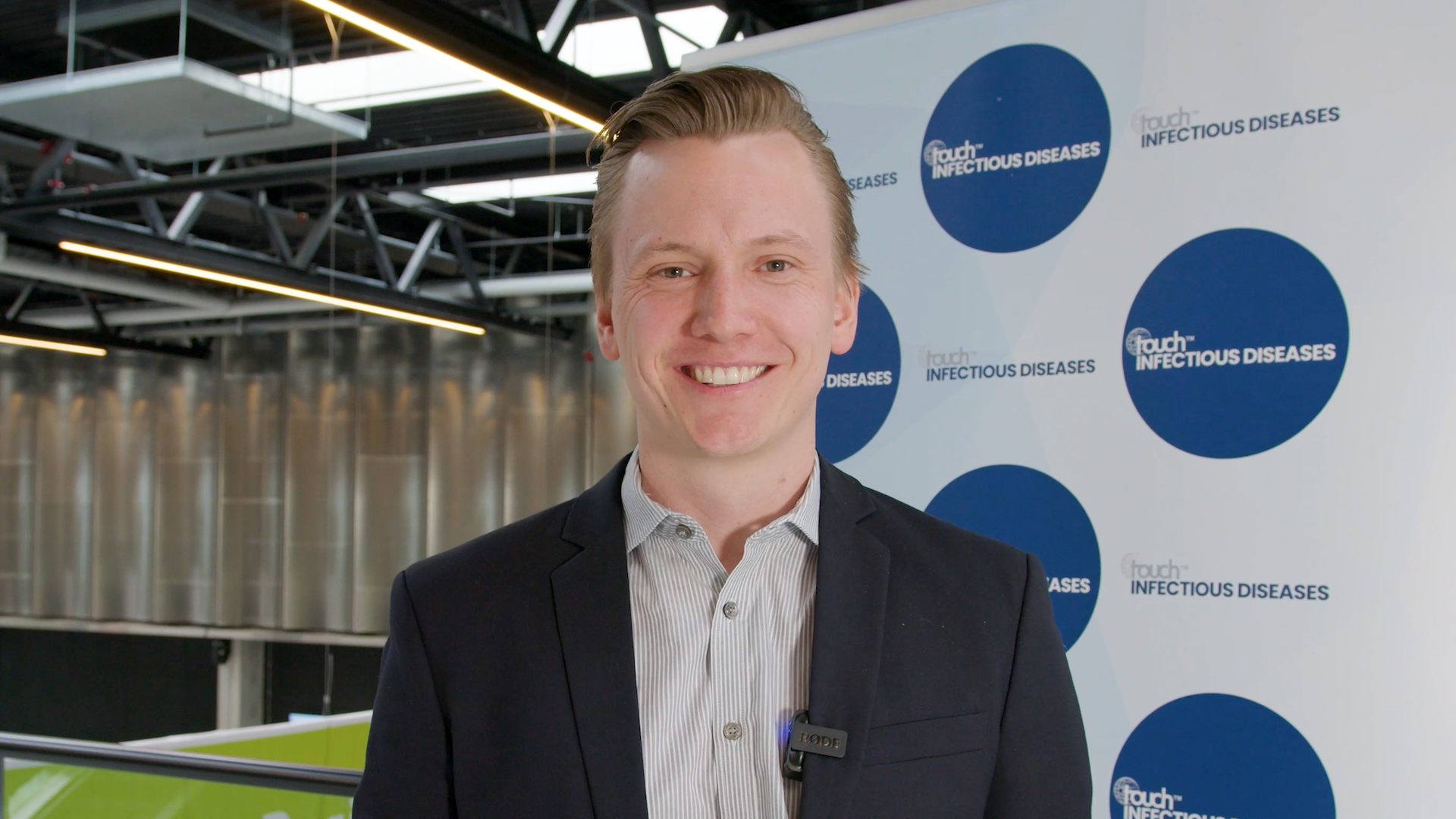
 We spoke with Dr Marc Steben, about the evolution of single-visit cervical cancer screening and treatment pathways, the role of self-sampling and artificial intelligence (AI)-supported triage, and practical lessons learned from implementing these programs.
Dr Marc Steben is a Family Physician; Co-PI, Papillomavirus automated visual examination project at the National Cancer Institute; and Chair of the Education Committee at the International Papillomavirus Society, Montreal, Quebec, Canada.
“One of the highest indicators of cervical cancer is not having been screened. Get screened.”

What is meant by a single-visit cervical cancer screening and treatment pathway?
The challenge of traditional screening pathways
When a woman undergoes cervical cancer screening today, it often involves multiple visits before a lesion is identified and treated. Cervical cancer is almost always caused by persistent infection with high-risk types of human papillomavirus (HPV).
With cervical cancer prevention, we are looking for precancerous lesions that can be monitored or treated before they progress to cancer. This differs from breast cancer screening, where the goal is to detect cancer as early as possible.
A major challenge is that women can be lost at multiple points in the pathway. There may be loss to testing, loss to diagnosis, loss to treatment and loss to follow-up. Every additional step increases the risk that someone who needs care will not receive it.
Self-sampling is transforming access

One important advance has been self-sampling. Women can now collect their own vaginal sample for high-risk HPV testing. We know from multiple studies that women perform self-sampling as effectively as healthcare professionals.
Self-sampling can be delivered through a variety of models. In countries such as Sweden and the Netherlands, kits can be mailed directly to women’s homes. In other settings, they may be distributed through pharmacies, community centers or other healthcare facilities.
The next challenge is what happens after testing. Traditionally, women may wait weeks for results and then require further appointments for colposcopy and treatment. At each stage, there is potential for delays and missed follow-up.
Using AI to support triage and treatment decisions
New technologies are helping address these challenges. AI-supported visual assessment tools can assist clinicians in determining whether a lesion is suitable for treatment, requires referral or remains indeterminate. Some devices also enable treatment through thermocoagulation during the same visit.
Reducing loss to follow-up
The ultimate goal is to minimize loss throughout the pathway. Through initiatives such as the PAVE study, supported by the US National Cancer Institute, researchers have demonstrated that screening, diagnosis and treatment can potentially occur within a matter of hours. In this model, women remain within the healthcare facility and receive care during a single visit, dramatically reducing loss to follow-up.
Expanding access for underserved populations
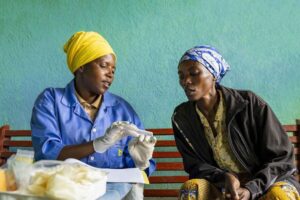
Credit: RBC1
There are still cultural and social barriers in some settings. For example, women may require family approval before undergoing treatment, or may have concerns about post-treatment restrictions. However, education and community engagement can help address these barriers.
Single-visit models are also relevant in high-income countries, particularly for populations that are mobile, underserved or difficult to reach, including migrants, refugees and individuals experiencing homelessness.
What are the most common barriers to successful single-visit care?
Making screening accessible
Access remains one of the biggest challenges.
Many healthcare services operate during standard working hours, when women may be at work or school. Some programs have addressed this by offering screening during evenings or weekends.
In Mali, for example, public awareness campaigns have been linked to dedicated screening weekends, allowing large numbers of women to be screened over a short period. Community health workers have also successfully brought screening directly to women in markets and other community settings.
The key lesson is that screening services must be convenient and accessible. The easier it is for women to access testing, receive results and obtain treatment, the more successful programs become.
Social and cultural norms can also present barriers to successful implementation, particularly in settings where women may require their husband’s approval to undergo treatment or where post-treatment recommendations, such as temporary sexual abstinence to allow healing, may be difficult to follow.
Portable technology is changing what is possible
Technology is also helping overcome geographic barriers. Portable devices can operate using batteries or simple power sources, allowing screening and treatment services to be delivered in remote settings. Portable diagnostic and treatment equipment are now available for low- and middle-income countries.
What practical lessons have you learned from implementing these programs?
Self-sampling should increase choice, not replace it
One important lesson is that self-sampling should increase choice rather than replace existing options.
Many women appreciate the convenience and privacy of self-sampling, and offering this option consistently increases screening participation. However, some women still prefer clinician-collected samples because they feel more confident having the procedure performed by a healthcare professional.
Programs therefore need to remain flexible and patient-centered.
Simplicity improves uptake
Another lesson is that simplicity matters. The more complicated the pathway becomes, the more women are lost along the way. When screening, diagnosis and treatment can be streamlined into a single encounter, participation and completion rates improve substantially.
Is there anything else clinicians should know?
The World Health Organization’s cervical cancer elimination strategy has established ambitious goals for reducing the global burden of disease.
However, women are still often required to navigate complex healthcare pathways to access screening and treatment. When these pathways become too complicated, some women disengage from care altogether.
One of the strongest predictors of cervical cancer remains a lack of screening. As a result, making screening simpler, more accessible and easier to complete should remain a priority for healthcare systems worldwide.
References:
- Gavi. rwanda knocking every door bid to end cervical cancer 2027. Available at: https://www.gavi.org/vaccineswork/rwanda-knocking-every-door-bid-end-cervical-cancer-2027 (accessed 23 June 2026).
More content in viral infections
Cite: Marc Steben. Single-visit cervical cancer care: From self-sampling to same-day treatment. touchINFECTIOUS DISEASES. 24 June 2026.
Editor: Katey Gabrysch, Editorial Director.
Disclosures: Dr Marc Steben has served on advisory boards for Merck and GSK and has participated in speaker bureau activities for both companies; and has received payments, honoraria or other forms of compensation from Bayer, Lupin, GSK, Roche Molecular Systems and Merck. Additional honoraria and grant support have been received from Abbott, BD/Waters, Attila/BioFire, Hologic, Laboratoire Médical Biron, Linepharma, Lupin, Merck/Merck Sharp & Dohme, Sanofi Pasteur, Paladin and Roche Molecular Systems.
Dr Marc Steben has also received honoraria from the non-governmental organisation HPV Global Action, of which they serve as co-president.
Dr Marc Steben owns Communications Action-Santé Inc. and Emotive Animation Studio and holds pharmaceutical investments through mutual funds.
Dr Marc Steben is currently participating in, or has participated within the past two years in, the Project PAVE clinical trial funded by the National Cancer Institute.
Dr Marc Steben has indicated that they do not hold any patents for products referred to in this educational activity or marketed by a commercial organization.
The content was developed and edited by human editors. No fees or funding were associated with its publication. touchINFECTIOUS DISEASES utilize AI as an editorial tool (ChatGPT (GPT-4o) [Large language model]. https://chat.openai.com/chat).
This content has been developed independently by Touch Medical Media for touchINFECTIOUS DISEASES in collaboration with Dr Marc Steben. Views expressed are the speaker’s own and do not necessarily reflect the views of Touch Medical Media.
SIGN UP to touchINFECTIOUS DISEASES!
Join our global community today for access to thousands of peer-reviewed articles, expert insights, and learn-on-the-go education across 150+ specialties, plus concise email updates and newsletters so you never miss out.