
Gonorrhoea remains a major global public health challenge, with rising incidence and increasing antimicrobial resistance highlighting the urgent need for effective prevention strategies. Observational data suggesting that the meningococcal B (4CMenB) vaccine may offer cross-protection against Neisseria gonorrhoeae generated considerable interest within the infectious diseases community. However, results from the GoGoVax randomized clinical trial provide important new evidence regarding the vaccine’s efficacy in high-risk populations.
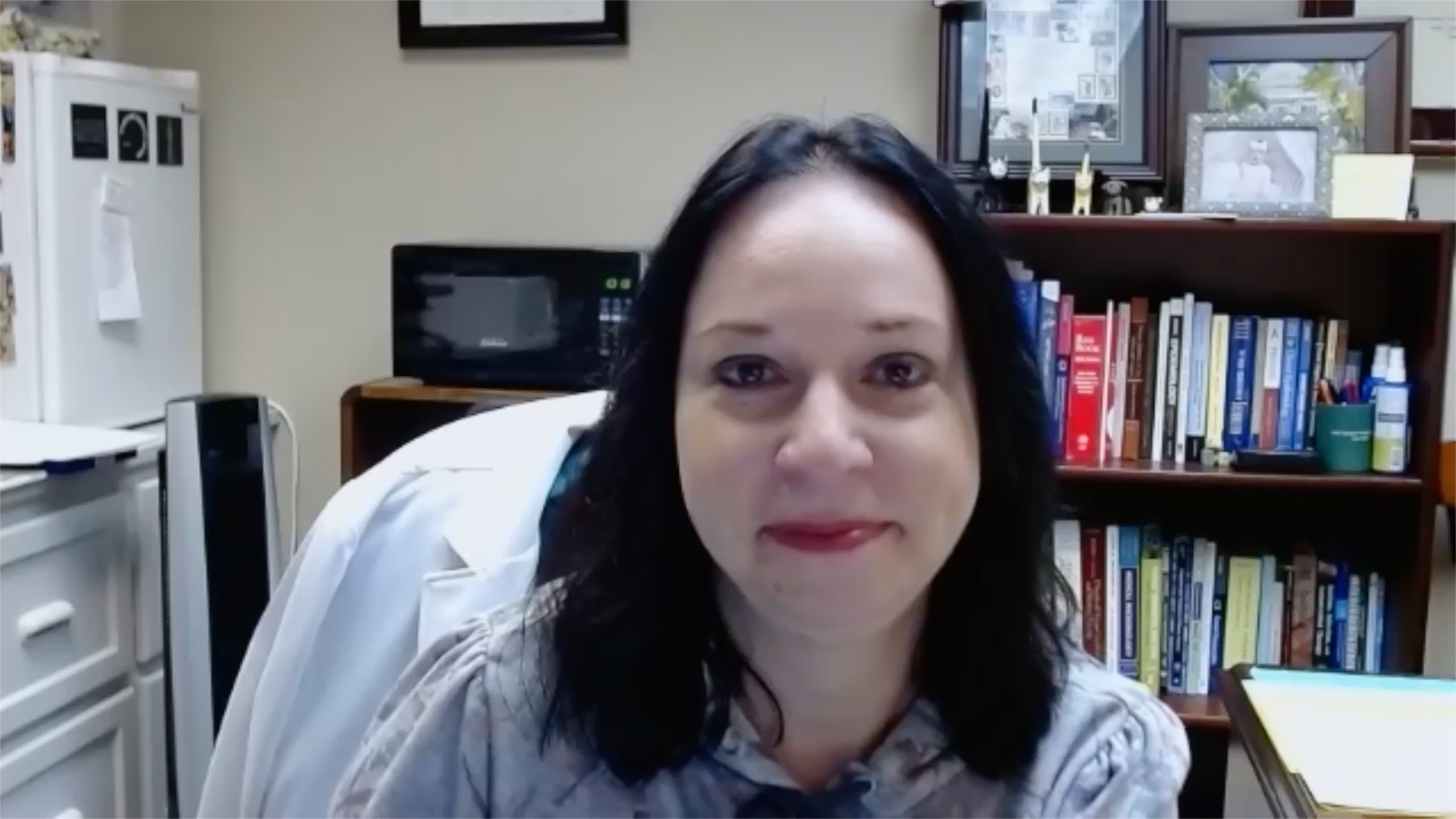
Presented at Conference on Retroviruses and Opportunistic Infections (CROI) 2026, Prof. Kate Seib (Institute for Biomedicine and Glycomics, Griffith University, Southport, Australia) discusses we the biological rationale for cross-protection, interpretation of the GoGoVax trial findings, and what these results mean for future vaccine development and prevention counselling (Abstract #197).
Q. What was the rationale for evaluating the meningococcal B (4CMenB) vaccine as a potential preventive strategy against Neisseria gonorrhoeae?
The 4CMenB vaccine was developed to prevent disease caused by serogroup B Neisseria meningitidis, which is closely related to Neisseria gonorrhoeae. Several of the vaccine’s antigens are also present in N. gonorrhoeae, providing a strong biological rationale for potential cross-protection.
Observational studies following 4CMenB vaccination campaigns reported reductions in gonorrhoea incidence, with estimated vaccine effectiveness of approximately 30–40%. The GoGoVax clinical trial (NCT04415424) was therefore designed to rigorously test this hypothesis by directly measuring the efficacy of 4CMenB in men who have sex with men at high risk of gonorrhoea..
Q. How should clinicians interpret the lack of protective efficacy seen in this randomized trial in light of earlier observational data suggesting cross-protection?
Clinicians should interpret these findings in the context of key differences between earlier observational studies and this randomized controlled trial. Observational evidence for cross-protection largely came from lower-risk populations and is inherently vulnerable to confounding, where vaccination status may reflect differences in healthcare access or health-seeking behaviour rather than a true vaccine effect.
By contrast, GoGoVax was a well-conducted randomized trial in which randomisation balanced both known and unknown confounders. The absence of protective efficacy therefore provides the strongest evidence to date that 4CMenB does not prevent gonorrhoea in this high-risk setting. These findings are also consistent with results from the smaller open-label DOXYVAC trial, which similarly showed no protective effect.
There are several ongoing trials investigating 4CMenB efficacy in different populations, with results expected by the end of 2026.
Q. What do the findings across symptomatic, asymptomatic and site-specific infections reveal about the challenges of preventing gonorrhoea through vaccination in high-risk populations?
While the trial was not powered to detect differences by symptoms or site of infection, there was no signal of protection in any subgroup. Infections in high-risk populations are frequent, often asymptomatic, and occur across multiple anatomical sites, so it is important that a gonorrhoea vaccine is able to prevent all or most types of infections.
This may be challenging to achieve, particularly in settings with repeated exposure, but it underscores the need for gonorrhoea-specific vaccines that can induce strong, durable immune responses.
Q. Given these results, how should clinicians approach gonorrhoea prevention counselling and what are the priorities for future vaccine development?
Clinicians should continue to focus gonorrhoea prevention counselling for men at high risk of infection on proven strategies such as regular testing, prompt treatment, partner notification and risk-reduction discussions. The 4CMenB vaccine should not be relied upon for prevention in high-risk populations.
People at ongoing risk will therefore need to depend on other effective prevention measures, including condom use and frequent screening, with sexual health clinics and community-based testing services remaining central to prevention efforts.
For future vaccine development, the priority is vaccines that can meaningfully reduce the gonorrhoea burden, even if protection is partial, as modest reductions in infection risk, duration or transmission could still deliver important public health benefits.
Q. What were the most important therapeutic and treatment updates presented at CROI 2026?
The most significant updates showed HIV care moving beyond daily pills, with strong Phase 3 data for new capsid-inhibitor–based regimens and progress toward weekly, monthly and even twice-yearly treatment and prevention options. Speakers emphasised that these longer-acting therapies could expand choice, improve durability and offer greater flexibility for both people living with HIV and those using PrEP.
Already registered? Login below.
Related content
Expanding first-line HIV options: MK-8591A-053 week 48 data on DOR/ISL in treatment-naïve adults
STI & HIV 2025 World Congress: Global progress, key trials and what’s next
More content in STIs
Cite: Kate Seib. Why Did 4CMenB fail to prevent gonorrhoea? Clinical implications from the GoGoVax trial. 02 March 2026.
Abstract: Kate Seib et al. Meningococcal B (4CMenB) Vaccination for the Prevention of Gonorrhea in Men Who Have Sex With Men. Presented at CROI 2026, February 22-25 2026, Denver, CO, USA. Abstract #197.
Editor: Katey Gabrysch, Editorial Director.
Disclosures: Kate Seib has received honoraria/honorarium from GSK paid to her institution, GSK provided vaccines for the GoGoVax trial.
The content was developed and edited by human editors. No fees or funding were associated with its publication. touchINFECTIOUS DISEASES utilize AI as an editorial tool (ChatGPT (GPT-4o) [Large language model]. https://chat.openai.com/chat).
This content has been developed independently by Touch Medical Media for touchINFECTIOUS DISEASES in collaboration with Prof. Kate Seib. Views expressed are the speaker’s own and do not necessarily reflect the views of Touch Medical Media.
SIGN UP to touchINFECTIOUS DISEASES!
Join our global community today for access to thousands of peer-reviewed articles, expert insights, and learn-on-the-go education across 150+ specialties, plus concise email updates and newsletters so you never miss out.