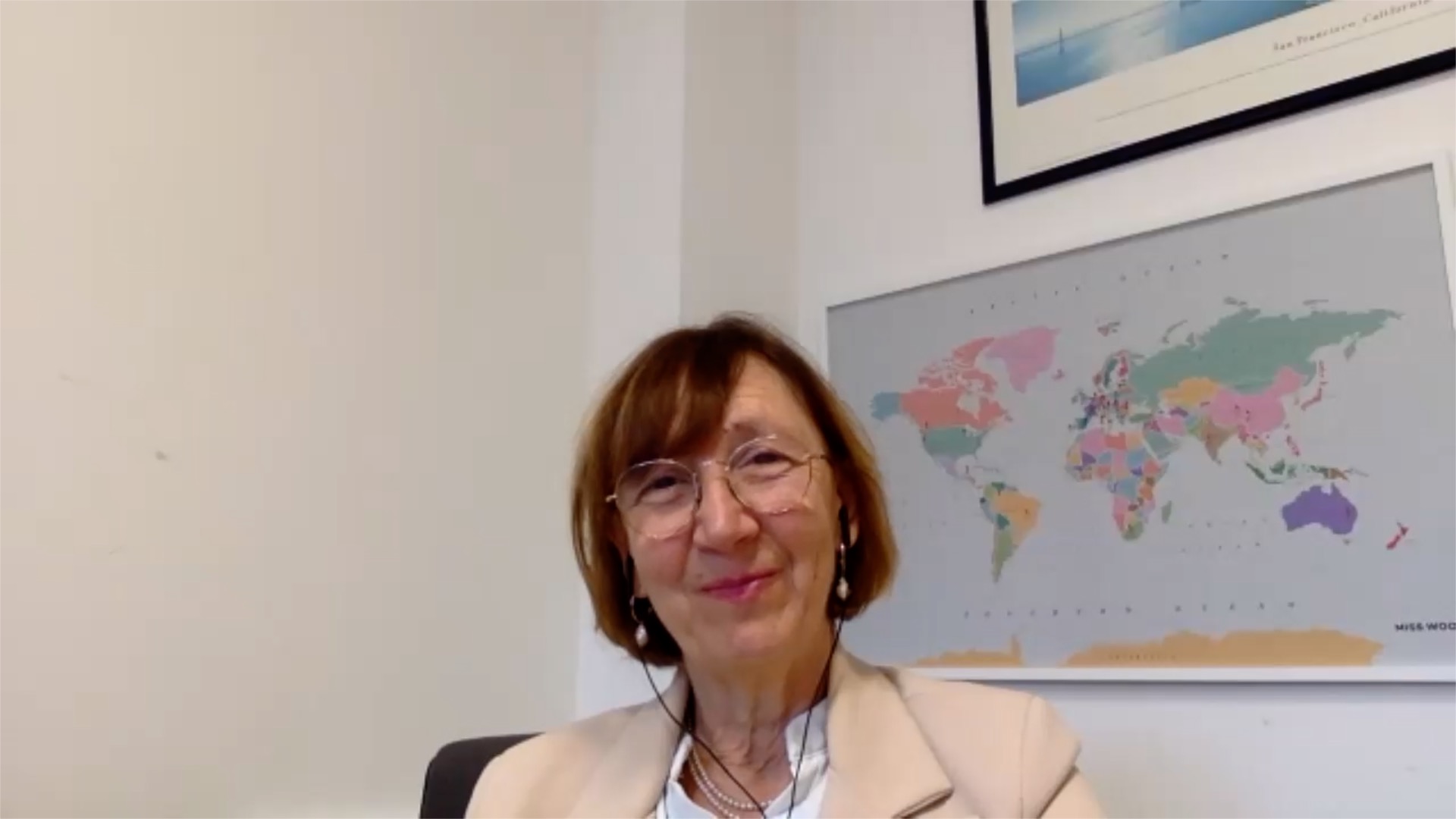

Dr Xin Hui Chan is making a name for herself in global health and infectious diseases research. Her work focuses on enabling access to essential medicines for vector-borne diseases such as malaria and dengue, often in some of the world’s most challenging settings.
In this interview, Dr Chan (University of Oxford, Oxford UK) reflects on her career path, the value of interdisciplinary collaboration and the importance of staying grounded in both science and patient impact. She also shares insights on mentorship, motivation and what’s next for infectious diseases in a changing climate.
I was awarded the Young Investigator Award for my work supporting the development and deployment of essential medicines for vector-borne infections, particularly malaria and dengue.
My work is quite interdisciplinary and I often bring together specialists from different fields to tackle complex problems around how we design and deliver drugs. The impact has been meaningful, but the process has been quite complex. If we can get everyone working collaboratively rather than competitively, that diversity becomes a strength.
That’s a really good question. I think in science, people often care deeply about their work, and it’s easy to get emotionally attached. One of the most useful pieces of advice I’ve received was to be guided by the science, not just your feelings about it.
In our case, because we work so closely at the interface with patient care, it’s also about doing what’s best for patients and focusing on the impact we want to achieve for them.
I was born and raised in Singapore, which has been at the centre of several outbreaks. When I was in school, it was the time of the SARS outbreak, and I saw how quickly an infection could change life as we knew it.
That really shaped me, I became passionate about how we could prevent something like that from happening again. I got involved in projects focused on developing treatments and prevention strategies for infectious diseases, which is what I do now.
One of the biggest challenges is that you can’t predict where a new infection will appear – it’s often in places that are hardest to study. It can be difficult to mobilize quickly, secure support and gain the trust of affected communities. But that’s also one of the most fulfilling parts of the work.
When you’re able to provide the right support, whether it’s ending an outbreak or helping a patient who might otherwise have had a poor outcome, you can see the impact immediately.
Another big challenge is the number of stakeholders involved. Bringing people together from different disciplines and backgrounds is complex but also incredibly rewarding. I’ve had the chance to work closely with people from around the world and learn from their strengths, all towards a shared goal of improving global health.
I’d say, as with anything in life, you have to do something you genuinely care about – and only you can know what that is. It’s not your mentors or your family, it’s you. Listen to that inner voice that tells you what you’re passionate about and what motivates you.
When your work aligns with that, it doesn’t just feel like a job, it becomes part of who you are. People often ask me how I find the energy to keep going, and it’s because I really care. I’ve known people who’ve died in outbreaks. During SARS, I watched some of my dad’s colleagues die.
Later, during COVID, I saw friends and colleagues get ill, I even got ill myself. These events have left a lasting impact. I’m deeply committed to doing what I can to prevent something like that from happening again. We might not be able to prevent every outbreak, but we can certainly work to make the next one better.
There’s been a strong focus this year on climate change and health, which I think is incredibly important. I work on vector-borne infections, and climate change is having a huge effect on how vectors spread, particularly mosquitoes, but also ticks and others. Their ranges are expanding, and that’s having a real impact on disease transmission. There have been some excellent keynote talks and sessions on that topic.
In terms of trials, I’m particularly excited about preliminary results of the SNAP trial (NCT05137119) results on Staphylococcus aureus bacteraemia, which are highly relevant to my clinical practice in infectious diseases.
About Dr Xin Hui Chan
Dr Xin Hui Chan is an NIHR Academic Clinical Lecturer in Infectious Diseases at the University of Oxford and Honorary Specialty Registrar at Oxford University Hospitals. Xin Hui trained in Oxford, London, Southeast Asia and North America, and completed an MRC-funded DPhil on the cardiovascular safety of antimalarials with MORU and the WHO Global Malaria Programme, where she was a technical expert and rapporteur. Her contributions have been recognised with the British Infection Association’s Barnett Christie Prize Lecture (2024) and ESCMID’s Young Investigator Award (2025). She serves on the UKHSA Malaria Expert Advisory Group and the editorial boards of Travel Medicine and Infectious Disease and PLOS Global Public Health.
Her research focuses on equitable therapeutic development for high-threat and emerging infections such as dengue and Nipah virus. She leads interdisciplinary work combining clinical trials, evidence synthesis, pharmacology, modelling and qualitative methods to improve how treatments for neglected infections are developed and deployed.
This content has been developed independently by Touch Medical Media for touchINFECTIOUS DISEASES. Views expressed are the speaker’s own and do not necessarily reflect the views of Touch Medical Media.
Interviewer: Caroline Markham
Disclosure: This short article was prepared by touchINFECTIOUS DISEASES in collaboration with Xin Hui Chan. The content was developed and edited by human editors. No fees or funding were associated with its publication. touchINFECTIOUS DISEASES utilize AI as an editorial tool (ChatGPT (GPT-4o) [Large language model]. https://chat.openai.com/chat). Xin Hui Chan has no financial or non-financial conflicts of interest to declare in relation to this article.
Cite: Enabling access to treatment of vector-borne diseases with Dr Xin Hui Chan: touchINFECTIOUS DISEASES Future Leader 2025. touchINFECTIOUS DISEASES. April 22nd, 2025
SIGN UP to touchINFECTIOUS DISEASES!
Join our global community today for access to thousands of peer-reviewed articles, expert insights, and learn-on-the-go education across 150+ specialties, plus concise email updates and newsletters so you never miss out.