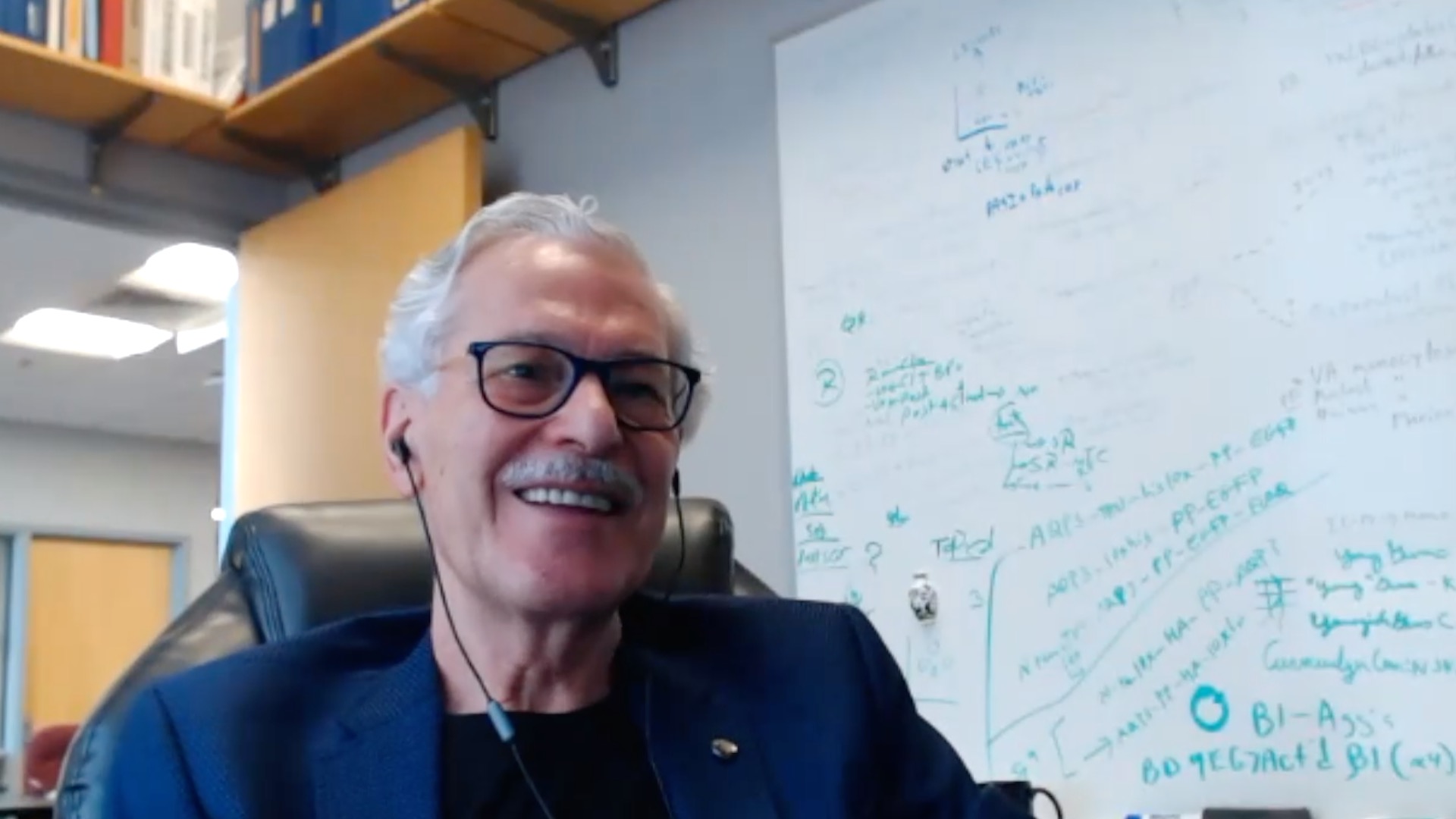
Editorial Board member Prof. Mahmoud Ghannoum (Integrated Microbiome Core and Centre for Medical Mycology, Cleveland, OH, USA) joins us to discuss ECCMID 2023 highlights in fungal infections, antifungal therapies, diagnostic approaches, and specific case reports that help advise clinicians in clinical practice.
Interviews in this series:
Ibrexafungerp against Mucor strains using time-kill and scanning electron microscopy
Antifungal resistance – biofilms, tolerance phenomena, treatment and diagnostics
ECCMID 2023 highlights in fungal infections
Disclosures: Mahmoud Ghannoum is a consultant for Ortho Dermatologics.
Support: Interview and filming supported by Touch Medical Media Ltd. Interview conducted by Katey Gabrysch.
Filmed in coverage of the 33rd European Congress of Clinical Microbiology & Infectious Diseases.
Click here for more content on fungal infections & for further ECCMID 2023 highlights visit here.
Transcript
I’m Mahmoud Ghannoum. I am the Director of the Center for Medical mycology and integrated microbiome core at Case Western Reserve University and University Hospitals in Cleveland, Ohio.
I really enjoyed the meeting, there were so many sessions going on. I enjoyed the diversity of the topics, including mechanisms of resistance, biofilm, but also cases to help clinicians deal with their patients and how to treat them. These were very nice meetings, which helped a lot of the infectious disease specialists and clinical microbiologists just learn more how they can deal with these infections on a day-to-day basis. Many, many new diagnostic approaches were presented. I was amazed by how many the new technologies are being introduced and what’s fascinating is that for diagnosis, we are starting to go from days to diagnose an organism, to have information about which organism is causing infection within hours, like with lateral flow, and PCR. I think this is going to change the field a lot, particularly for the fungi, because with fungi, as you know, because it grows slowly, it takes forever. So having these new diagnostic approaches will help HCPs greatly.