

– Dr Ikechukwu Moses
Bacteriophage therapy uses viruses to infect and kill harmful bacteria, and is re-emerging as a powerful tool in the fight against multidrug-resistant infections. Once overshadowed by the discovery of antibiotics, this highly targeted treatment is now gaining global attention as antibiotic resistance continues to rise.
In this Q&A, Dr Ikechukwu Moses (Division of Infectious Diseases, EPM-UNIFESP, São Paulo, Brazil, explores how phage therapy works, its clinical applications, and what’s needed to bring it into mainstream infectious disease care.
Q. How would you explain bacteriophage therapy, what it is and why it’s gaining renewed interest in the fight against bacterial infections?
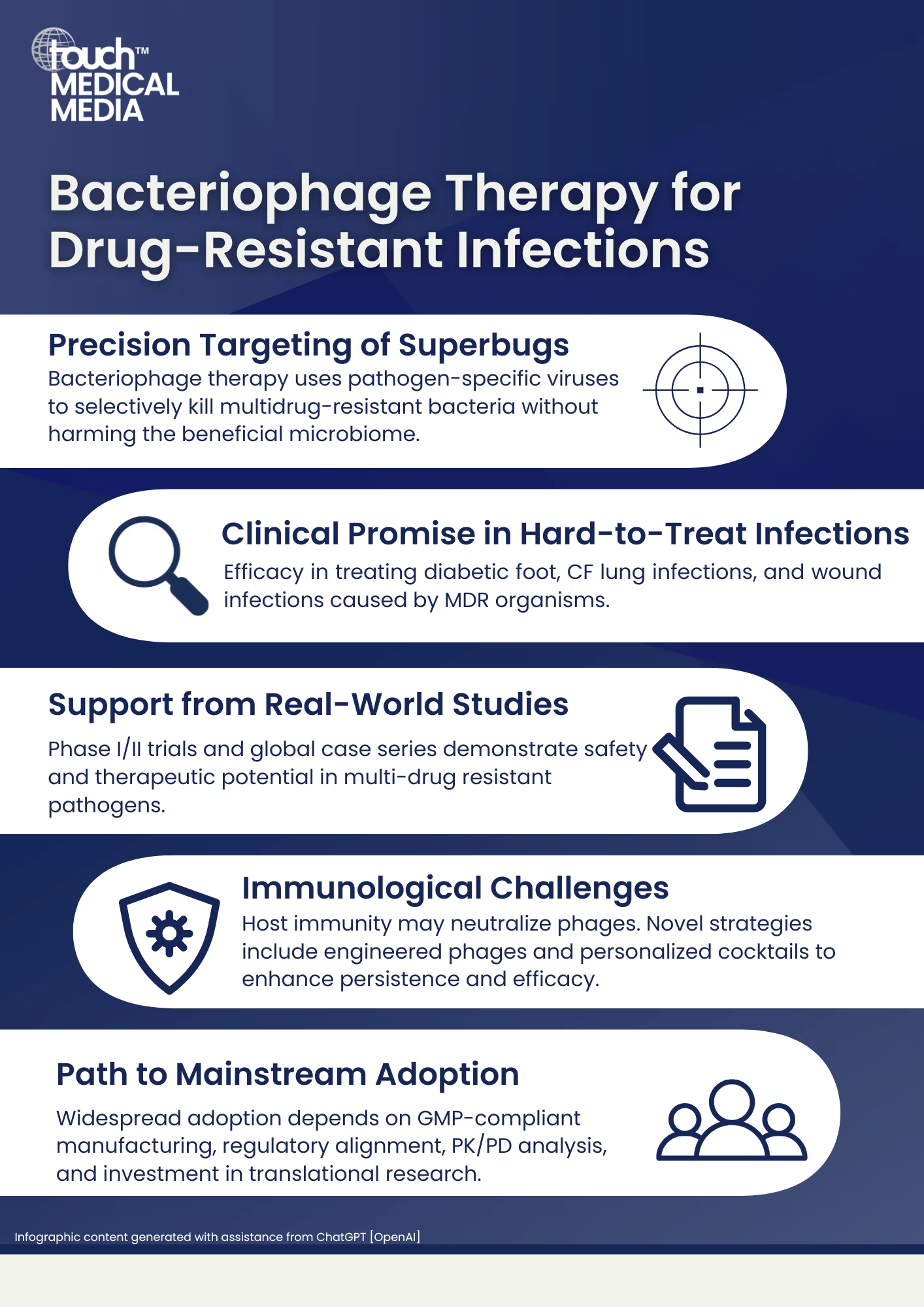
Bacteriophage therapy, also known as phage therapy, is the use of bacteriophages (viruses that infect/attack or kill bacteria) in the treatment of bacterial infections. One intriguing trait about bacteriophages is their specificity in targeting a particular group of bacterial cells (in this case, pathogenic strains which have the potential of causing diseases) while leaving the beneficial bacteria (which forms the normal microbiome defence system) unharmed or unaltered. In their attack approach, bacteriophages usually commandeer the target bacterial cell’s resources by forcing the bacterial cell to replicate copies of the phage genomes which eventually leads to lysis/death of bacterial cells and the subsequent release of phage progeny.
These newly released phage progenies continue the cycle of infecting more target bacterial cells until they clear-out the bacterial pathogens in the system or reduce them to a very low-level of infectivity potential. Phage therapy was commercially developed as far back as the 1930s; however, it was later abandoned in Western countries due to the widespread discovery and introduction of broad-spectrum chemical antibiotics.
Despite many years of neglect in Western countries, phage therapy is still actively being used as a routine medical treatment strategy in Eastern European countries, especially Georgia, Poland, and even Russia. Today, there is a very strong renewed interest in phage therapy, especially due to the increasing frequency and emergence of multidrug-resistant bacterial pathogens in healthcare settings (both in human and veterinary medicine).
Bacterial pathogens are getting smarter, and are evolving into very recalcitrant forms, especially with changing environmental pressures and exposures, and excessive usage/misuse/abuse of our precious antibiotics, in addition to the dwindling development of newer antibiotics. In fact, more troubling is the evolution and emergence of very recalcitrant bacterial pathogens exhibiting resistance to even our last line antibiotics – this further limits and complicates treatment options.
As our last line of antibiotics defence gets stripped off day-by-day, we are step-wisely running into a new risk of transitioning to another “pre-antibiotic era” where a simple cut on the skin or a normally treatable wound infection could lead to death; thus, further worsening healthcare challenges and global economic burden.
To avert the impending doom due to antimicrobial resistance, there is a magnified search for a more sustainable alternative therapeutic approach. On top of that list of alternative therapeutic strategies is bacteriophage therapy, previously abandoned a long time ago. Phage therapy is a very promising field with strong potentials of reducing the burden of antimicrobial resistance menace.
Q. What types of infections or patient populations are currently considered the most promising targets for bacteriophage therapy?
Currently, bacteriophage therapy is mainly employed on compassionate grounds, a form of personalized treatment, after exhausting all other treatment options in a life-threatening medical condition. Infections currently considered the most promising targets for bacteriophage therapy are those caused by multidrug-resistant (MDR) bacterial pathogens which exhibit resistance to traditional antibiotics.
Patients at the top of the list are ones with localized infections such as burn wound infections, diabetic foot ulcers, cystic fibrosis lung infections, postoperative wound infections, amongst others, caused by clinically important MDR bacterial pathogens such as Enterobacterales, Pseudomonas aeruginosa, Staphylococcus spp., Enterococcus spp, and Acinetobacter baumannii.
Bacteriophages have been very valuable in managing these arrays of complex and recalcitrant infections due to their specificity in targeting these superbugs while leaving the beneficial microbiome unaltered.
Nevertheless, robust clinical trials are needed before bacteriophage therapy becomes widely available for use in healthcare settings as lots of evidence to validate its therapeutic efficacy, safety, and feasibility are important before massively pushing for their public usage as a standard treatment strategy.
Q. How does the human immune system interact with therapeutic phages, and what challenges or opportunities does that create for treatment effectiveness?
The human immune system, to some extent, enhances phage therapy by clearing the remnant particles of bacterial pathogens killed by bacteriophages during phage treatment. Despite this complementary activity between therapeutic phages and the immune system, there are some key challenges which tend to diminish or hinder the efficacy of phage therapy.
The immune system can sometimes recognize therapeutic phages as foreign agents, thereby activating phage-specific neutralizing antibodies which rapidly clear out the phages from the patient’s system with a resultant impact of diminishing their effectiveness/efficacy. Furthermore, there are chances of allergic responses from some components of lysed bacterial cells (such as endotoxins) after phage treatment; thus, leading to a series of anaphylactic reactions and inflammatory responses in patients undergoing phage therapy.
Efforts are currently ongoing in engineering bacteriophages to become less immunogenic. Some very intriguing studies which centres around designing bacteriophage-based vectors to mimic components that the immune system recognizes as “self” is currently ongoing in THERAPHAGE Lab (Headed by Dr. Roderick Slavcev), School of Pharmacy, University of Waterloo, where I am currently a Visiting Scholar. Breakthroughs from such a type of research in THERAPHAGE Lab will completely revolutionize bacteriophage therapy.1
Additionally, the use of phage cocktails, a mixture of different bacteriophage strains, is also valuable as this would further boost the therapeutic efficacy of phages as against neutralizing antibodies which target a specific phage type. Personalized treatment approaches whereby phages are tailored to a patient’s immune system profile for a specific bacterial infection could also improve treatment outcomes.
Q. Could you highlight some interesting studies that support the use of bacteriophage therapy?
The success of phage therapy has been reported in both human and veterinary medicine. In fact, personally, I think that for phage therapy to work efficiently, a more holistic approach within the One Health context will be more impactful in phage therapy success where human, veterinary, and environmental entities are all considered.2
We are at the concluding stage of a Brazilian study headed by Prof. Ana Cristina Gales (Division of Infectious Diseases, Paulista School of Medicine [PSM], Federal University of Sao Paulo [UNIFESP, São Paulo, Brazil), where we attempted to decontaminate hospital surfaces using bacteriophage cocktails against clinically important clones of Klebsiella pneumoniae circulating in Brazilian hospitals with some very good and promising results.
Another ongoing collaborative study in Brazil headed by Prof Ana Cristina Gales (Escola Paulista de Medicina, Universidade Federal de São Paulo [EPM-UNIFESP], São Paulo, Brazil) and Prof. Bruno Miotto (University of Santo Amaro [UNISA], São Paulo, Brazil) which involves the treatment of skin infections in companion dogs due to methicillin-resistant Staphylococcus pseudintermedius has produced some interesting preliminary results with good level of success.
Intriguing positive results have also been recorded against multidrug-resistant bacterial pathogens implicated in various infections in some studies across the world. Currently, the most readily available bacteriophage cocktails in standard treatment are usually sourced from Georgia, Poland, and Russia.
However, very promising changes are beginning to manifest with regards to global acceptance of phage therapy as a standard treatment strategy.
Some bacteriophage-centred clinical trials, including those approved by the U.S. Food and Drug Administration (FDA) in different centres are being employed in treating infections caused by multidrug-resistant bacterial pathogens.4-13
Bacterial pathogens such as methicillin-resistant Staphylococcus aureus (MRSA), Pseudomonas aeruginosa, Acinetobacter baumannii, Enterobacterales, amongst other clinically important pathogens have been implicated in cases of diabetic foot ulcers, wound infections, prosthetic joint infections, urinary tract infections, chronic otitis, implant infections, and bone and joint infections. Interesting successes with no significant side effects have been recorded in the preliminary results of some of these studies.
Q. What key developments do you think are necessary for phage therapy to become a standard treatment option in infectious disease care?
The success of bacteriophage therapy in becoming a standard alternative therapeutic strategy in combating infectious disease centres on some key factors such as advancements in regulatory approvals; conducting extensive large-scale randomized controlled trials with clinical evidence of efficacy and safety; establishing good manufacturing and quality control/assurance processes with good manufacturing practices (GMP) standards; development of effective techniques to assess phage activity; development and optimization of delivery systems/methods for therapeutic phages; gauging their dosages and pharmacokinetic/pharmacodynamic (PK/PD) parameters, and gaining regulatory approvals for therapeutic use are some of the key components.
In addition to all these key factors, great support from government and private sector are vital in pushing bacteriophage therapy into a globally acceptable standard treatment option, especially as we are currently on the verge of transiting into another type of pre-antibiotic era where our currently available traditional antibiotics are becoming ineffective due to the evolution and emergence of multidrug-resistant and extensively drug-resistant bacterial pathogens.
In fact, it is scarier now, based on a predicted projection, that by 2050, there will be an annual death of 10 million people globally due to antimicrobial resistance.3
It is time to magnify our search for alternative therapeutic approaches and protect our remaining precious antibiotics. That time to act is NOW! Phage therapy is a very promising alternative, and I see this becoming a globally accepted therapeutic strategy in the very near future, especially in the face of dwindling development of newer antibiotics.
After reading this article you will be able to:
- Define bacteriophage therapy and explain how it targets bacterial infections.
- Identify patient groups and infections most suitable for phage-based treatment.
- Evaluate the role of the immune system in modulating phage therapy outcomes.
- Review key clinical studies supporting the safety and efficacy of phage therapy.
- Recognize the regulatory and scientific developments needed for broader clinical adoption.
Further content in bacterial infections and antimicrobial resistance
Download Additional Learning Resources
This content has been developed independently by Touch Medical Media for touchINFECTIOUS DISEASES. Views expressed are the speaker’s own and do not necessarily reflect the views of Touch Medical Media.
Editor: Katey Gabrysch, Editorial Director.
Disclosures: This short article was prepared by touchINFECTIOUS DISEASES in collaboration with Ikechukwu Moses. The content was developed and edited by human editors. No fees or funding were associated with its publication. Ikechukwu Moses has nothing to disclose in relation to this interview.
Cite: Ikechukwu Moses. Bacteriophage therapy: A powerful alternative to antibiotics in the fight against superbugs. touchINFECTIOUS DISEASES. 09 September 2025.
References:
-
-
-
-
-
World Health Organization. One Health. Geneva: WHO. Available from: https://www.who.int/health-topics/one-health (accessed 08 September 2025).
-
Theraphage Bio. Theraphage: Precision Phage Therapy Solutions. Available from: https://www.theraphage.bio/(accessed 08 September 2025).
-
Nir-Paz R, Ami R. Study details | bacteriophage therapy TP-102 in diabetic foot ulcers. 2022. Available at: https://doi.org/10.1007/978-3-030-45885-0_18 (accessed 23 August 2024).
-
Jault P, Leclerc T, Jennes S, et al. Efficacy and tolerability of a cocktail of bacteriophages to treat burn wounds infected by Pseudomonas aeruginosa (PhagoBurn): a randomised, controlled, double-blind phase 1/2 trial. Lancet Infect Dis. 2019;19(1):35–45.
-
Taha OA, Connerton PL, Connerton IF, El-Shibiny A. Bacteriophage ZCKP1: a potential treatment for Klebsiella pneumoniae isolated from diabetic foot patients. Front Microbiol. 2018;9:2127.
-
Leitner L, Sybesma W, Chanishvili N, et al. Bacteriophages for treating urinary tract infections in patients undergoing transurethral resection of the prostate: a randomized, placebo-controlled, double-blind clinical trial. BMC Urol. 2017;17(1):90.
-
Bacteriophage therapy of chronic nonhealing wound: clinical study. Int J Low Extrem Wounds. 2019;18(2):171–5.
-
Law N, Logan C, Yung G, et al. Successful adjunctive use of bacteriophage therapy for treatment of multidrug-resistant Pseudomonas aeruginosa infection in a cystic fibrosis patient. Infection. 2019;47(4):665–8.
-
Tamma PD, Souli M, Billard M, et al. Safety and microbiological activity of phage therapy in persons with cystic fibrosis colonized with Pseudomonas aeruginosa: study protocol for a phase 1b/2, multicenter, randomized, double-blind, placebo-controlled trial. Trials. 2022;23(1):1057.
-
Onallah H, Hazan R, Nir-Paz R; Israeli Phage Therapy Center (IPTC) Study Team. Compassionate use of bacteriophages for failed persistent infections during the first 5 years of the Israeli Phage Therapy Center. Open Forum Infect Dis. 2023;10(5):ofad221.
-
Ooi ML, Drilling AJ, Morales S, et al. Safety and tolerability of bacteriophage therapy for chronic rhinosinusitis due to Staphylococcus aureus. JAMA Otolaryngol Head Neck Surg. 2019;145(8):723–9.
-
Kaabi SAG, Musafer HK, Hashim ST, Raheem ZK. Novel phage cocktail for the treatment of bacteria causing chronic suppurative otitis media. Trop J Nat Prod Res. 2020;4(10):680–6.
-
Wittebole X, Opal S. Phagetherapy: clinical applications – critical appraisal of randomized controlled trials. In: Witzany G, ed. Biocommunication of Phages [Internet]. Cham: Springer International Publishing; 2020:371–83. Available at: https://doi.org/10.1007/978-3-030-45885-0_18 (accessed 23 August 2024).
-
O’Neill J. Tackling drug-resistant infections globally: final report and recommendations. Review on Antimicrobial Resistance. 2016. Available from: https://amrreview.org/sites/default/files/160518_Final%20paper_with%20cover.pdf (accessed 08 September 2025).
-
-
-
-
Register now to receive the touchINFECTIOUS DISEASES newsletter!
Don’t miss out on hearing about our latest peer reviewed articles, expert opinions, conference news, podcasts and more.